
When it comes to flake ice makers, the evaporator is basically the heart of the operation—it’s the surface where water actually turns into those thin, loose flakes. And here’s the thing: not all evaporators are created equal. The design you go with affects everything from how much ice you get and how much energy you burn, to how easy it is to clean and maintain. For buyers, it’s tempting to just compare specs and pick the biggest advertised capacity, but honestly, that’s only half the story. You also have to think about whether the evaporator fits your refrigeration setup, the water quality where you are, the space you’ve got, and how much ice you really plan to use day to day. It’s the little details that can make or break your experience. Take a narrow service area, for instance—it can make something as routine as an inspection way harder than you'd think.
Okay, so this isn’t one of those guides that tells you there’s a single “best” evaporator for 2026 — honestly, that’d be impossible since every site’s different. Instead, we’re looking at the practical stuff you actually need to think about when buying. I’ll walk you through the usual design differences and point out what to pay attention to in the spec sheets: materials, rated operating conditions, ice thickness, how easy it is to get in there for maintenance, that kind of thing. And here’s a big one — when you’re talking to suppliers, ask exactly how they measured that capacity number they’re throwing around. Get them to send over documentation for the conditions you’re actually going to run in. Don’t just compare the big bold number; dig into the details. Look, a model that’s built for steady production may not be the right fit if your business deals with sharp demand spikes or doesn’t have much room for service work. And honestly, no evaporator type is automatically ideal—even a really capable unit can let you down if cleaning access or local water quality gets overlooked. So use the comparison as a starting point, then run it by a qualified refrigeration pro and check the manufacturer’s technical data before you make the call.
2026 Best Flake Ice Maker Evaporator Types for Buyers
What a Flake Ice Maker Evaporator Does
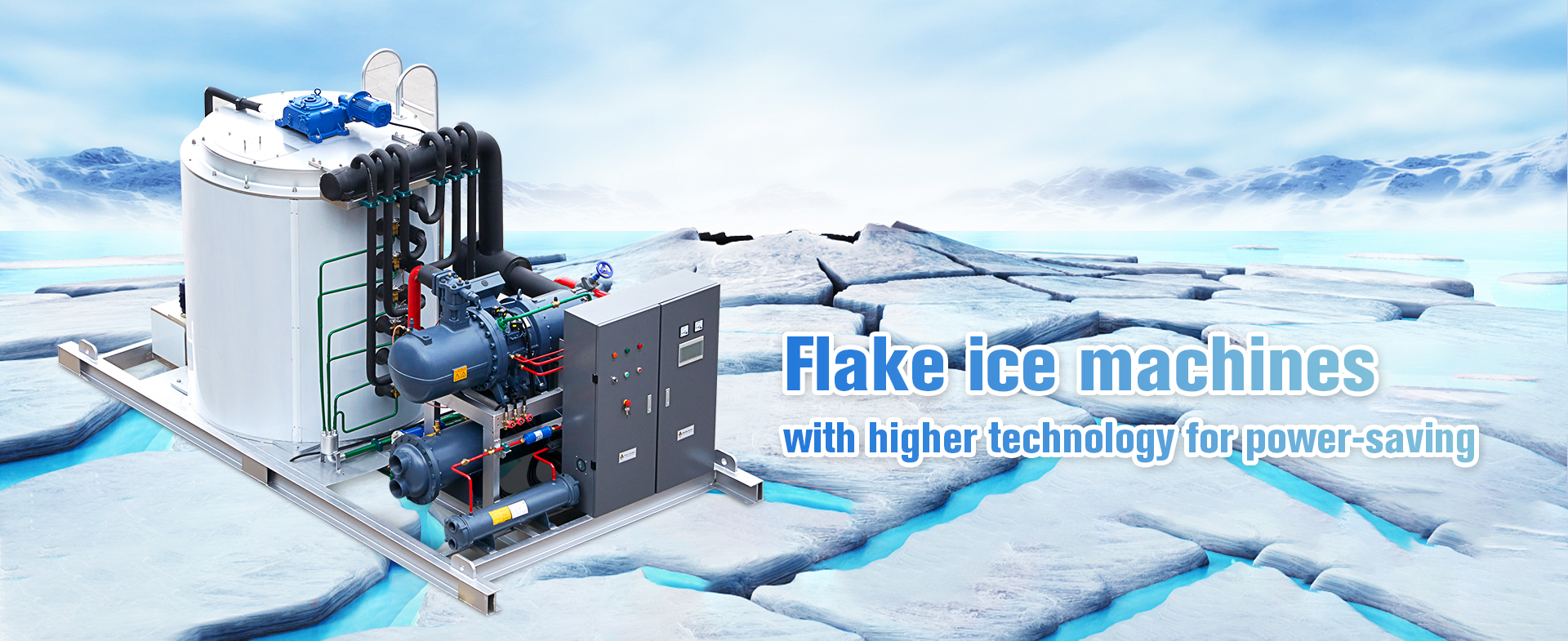
A flake ice maker evaporator is the cold surface where water turns into ice. In many designs, refrigerant cools the inside of a vertical drum. A thin film of water flows over its outer wall and freezes. A rotating scraper shaves off the ice, which falls into a storage bin as soft flakes. These flakes settle around irregular shapes, making them useful for chilling produce, seafood, and prepared foods.
The evaporator does more than create a cold surface. Its area, water flow, refrigerant control, and scraper clearance all affect ice thickness and production. Uneven water flow can leave bare patches or thick ridges. Mineral scale can slow heat transfer, while a worn scraper may leave ice stuck to the drum. It is easy to blame the evaporator too quickly; water pressure and operating conditions can cause similar symptoms. A qualified technician can check the full system before a major part is replaced.
Tips: Ask about scraper access, cleaning needs, and rated output at your actual inlet-water temperature. Real conditions matter. Also check how easily the evaporator can be inspected. That detail is easy to overlook.
Flake ice forms when a thin film of water meets a refrigerated evaporator wall. In many machines, water is distributed across a vertical cylinder, freezes in a shallow layer, and is cut away by a rotating scraper. The newly exposed surface then receives more water. A clean, even film matters. Dry patches can leave uneven ice, while poor scraping may let ice build up and slow heat transfer.
The energy load is substantial. NIST Chemistry WebBook data gives water’s enthalpy of fusion as about 6.01 kJ per mole, or roughly 334 kJ per kilogram of ice formed. The evaporator must remove that heat, along with heat needed to cool incoming water. ASHRAE’s Handbook—Refrigeration discusses ice-making performance in relation to heat transfer, water application, and ice release. Buyers should inspect these parts as a system, not judge the evaporator by surface area alone. A useful check is whether water reaches the full freezing surface and whether the scraper clears it consistently. Small gaps matter. Still, surface appearance is not a perfect performance test; operating load, water temperature, and maintenance can change the result.
A simplified thermal path for water freezing on a refrigerated evaporator surface.
In a common scraped-surface flake ice design, water flows over a refrigerated drum. A thin layer freezes on the surface, then a scraper removes it as flakes. The chart is conceptual, not measured machine data: it shows a representative path from liquid water at 5°C, through the approximately 0°C freezing point of pure water at standard atmospheric pressure, to ice below freezing. Actual operating temperatures vary by machine and conditions.
Flake ice makers commonly use a vertical cylindrical evaporator. Refrigerant cools the drum surface, and a thin layer of ice forms as water flows over it. A rotating scraper removes the ice into soft flakes. This design is widely used because it produces ice continuously and fits many commercial applications. Buyers should check the drum material, scraper access, and rated output under their expected water and room conditions. Capacity figures can shift with warmer inlet water.
Some machines use a horizontal drum arrangement. Its basic job is similar, but the layout and service access differ. Compare how easily technicians can inspect the scraper, seals, and water distributor. Small details matter. A poorly adjusted scraper may leave uneven ice or increase wear. Evaporator shape alone does not determine performance; refrigeration controls and water quality also play a part.
Tips: Ask for operating data at your actual inlet-water temperature, not only ideal test conditions. Check cleaning instructions and replacement-part availability before buying. If the seller cannot explain how ice thickness is controlled, pause and ask for a clearer specification. The answer may not be as simple as it first sounds.
A flake ice evaporator’s shape affects more than its footprint. In a vertical-cylinder design, water spreads across a cooled wall and freezes into a thin layer. A scraper cuts the ice into flakes as the cylinder operates. This steady harvesting can suit continuous production, but blade clearance and water distribution matter. Uneven spray may leave bare areas or produce inconsistent flakes. Small details count.
Horizontal drum designs arrange the freezing surface differently, which can change access for cleaning and the space needed around the machine. Buyers should compare the scraper assembly, refrigerant feed, and service access, not geometry alone. Ask how output changes with warmer inlet water or partial loads. That sounds simple. It isn’t always. Published capacity may reflect ideal conditions, while a real kitchen or processing room brings fluctuating demand, mineral deposits, and limited maintenance time. Request operating data for your expected conditions, and check whether technicians can inspect the evaporator without extensive disassembly. No design wins every site; the best fit depends on reliable ice output and practical upkeep.
| Evaporator design | How it works | Cooling performance | Energy considerations | Installation and controls | Maintenance considerations | Typical buyer fit |
|---|---|---|---|---|---|---|
| Direct-expansion (DX) vertical drum | Refrigerant evaporates inside passages or a jacket associated with a vertical freezing drum. Water freezes as a thin layer on the drum and a scraper removes it continuously. | Provides direct refrigeration at the ice-forming surface. Output and ice condition depend on refrigerant conditions, water flow, drum design, and scraper adjustment. | A direct heat-transfer path avoids a separate secondary-fluid circuit. Actual efficiency depends on the system design and operating conditions. | Requires refrigerant piping, metering, and controls suited to the selected refrigerant and compressor system. | Inspect the scraper, bearings, water distribution, and refrigerant circuit. Keep the freezing surface clean and follow the manufacturer’s service procedures. | A common choice for commercial flake ice production where a direct refrigeration system is appropriate. |
| Flooded or recirculated-refrigerant vertical drum | Liquid refrigerant is supplied to the evaporator and circulated or maintained at a flooded level so boiling refrigerant cools the drum surface. | Can provide consistent refrigerant contact with the heat-transfer surface when correctly designed and controlled. Performance depends on refrigerant distribution and operating stability. | Recirculation equipment and controls add system requirements; efficiency should be assessed for the complete refrigeration plant, not the evaporator alone. | May require a refrigerant separator, recirculation equipment, level control, and additional piping, depending on the system configuration. | Requires attention to refrigerant inventory, oil management, controls, and the same mechanical and water-side checks as other drum designs. | Facilities with refrigeration expertise and a plant designed for recirculated or flooded operation. |
| Secondary-fluid (brine or glycol) drum system | A separate refrigeration system cools a secondary fluid, which circulates through the flake ice evaporator to remove heat from the drum. | Separates the primary refrigerant circuit from the ice-making equipment. The additional heat-exchange step creates a temperature difference that can affect overall system performance. | Secondary-fluid pumps consume energy, and the extra heat exchanger can reduce overall efficiency compared with a well-designed direct system. | Needs a secondary-fluid loop, pump, expansion provisions, and fluid-temperature controls in addition to the refrigeration equipment. | Check fluid concentration and condition, pump operation, strainers, leaks, and the secondary heat exchanger, as well as the drum and scraper. | Applications that value refrigerant-circuit separation or need a centralized chilled-fluid arrangement. |
| Evaporator design with an enhanced or specialized drum surface | Uses a particular drum material, surface finish, or heat-transfer construction while retaining the core process of freezing a thin layer and scraping it away. | Surface construction can influence heat transfer, ice release, and wear. No surface treatment guarantees better output across all water qualities and operating conditions. | Energy use is determined by the complete refrigeration system and operating point; compare independently stated system data rather than surface claims alone. | Compatibility with the refrigerant, water quality, cleaning method, and operating controls should be confirmed for the specific unit. | Check surface condition and scraper contact regularly. Cleaning chemicals and tools must be compatible with the drum material and applicable food-safety requirements. | Buyers comparing durability, cleanability, and service requirements for a defined operating environment. |
In 2026, compare flake ice evaporators by more than nameplate capacity. Check the freezing surface, scraper arrangement, and how easily operators can inspect wear parts. A vertical cylinder and a drum design may differ in ice contact time and service access; confirm these details against the actual machine layout. Small details matter. ASHRAE’s 2022 Handbook—Refrigeration gives water’s latent heat of fusion as about 334 kJ/kg, or 0.093 kWh of thermal energy per kilogram of ice. That is a physical baseline, not the machine’s electrical consumption. Real use also includes cooling feed water, compressor work, motors, and heat losses.
Compare output and energy use under the same inlet-water temperature and ambient conditions. AHRI Standard 810 provides a framework for rating commercial ice makers, including production and energy performance. Ask suppliers for test conditions, daily output, energy per unit of ice, and the stated operating range. Then check whether the evaporator resists scaling and corrosion, and whether cleaning requires special tools. Look closely at scraper replacement intervals. I would treat a single “high-efficiency” figure cautiously; site conditions can change results. A quiet, accessible design may be easier to maintain, but confirm that service access does not compromise insulation or water drainage.
Choose a flake-ice evaporator around the product and workflow, not catalog capacity alone. Fish processors often need thin flakes that spread quickly across trays. FAO Fisheries Technical Paper 436 gives roughly a 1:1 ice-to-fish ratio as a practical estimate for chilling fish in warm conditions. Insulation and handling can change that demand. Treat the figure as a planning reference, not a guarantee. Warm deliveries and exposed bins add real load.
Compare vertical-drum and horizontal-drum designs for floor space, discharge route, and scraper access. Check how easily technicians can remove scale and clean water-contact surfaces. ASHRAE Handbook—Refrigeration explains that evaporator performance depends on operating conditions and heat transfer. So compare output at your actual water temperature and refrigerant conditions, not just the advertised daily capacity. Request a production test using your expected settings. One detail is easy to miss: a high-output machine can still overwhelm a small bin or auger. Leave service clearance. The cheapest layout may not stay cheapest if cleaning takes longer than expected.
The FAO’s *State of World Fisheries and Aquaculture 2024* underscores the importance of resilient seafood systems and reducing losses across the supply chain. In this context, a 30-ton-per-day flake ice maker can support high-volume handling by providing a steady supply of ice for chilling seafood during processing, storage, and transport. Flake ice’s broad contact with products helps maintain consistent cooling, a practical consideration for cold chains serving busy landing sites and processing facilities.
At the heart of the system, a fixed vertical evaporator drum is designed for efficient heat transfer and continuous ice production. It can be manufactured from SUS304 stainless steel or carbon steel, with a treated surface, while automated protective welding and annealing heat treatment support dependable construction and performance. The evaporator can be used in flake-ice plants and ammonia refrigeration systems. Connecting its tubing to a suitable refrigeration source enables continuous ice making, with a straightforward installation approach that can help control setup costs for seafood operators.
It provides a cold surface where water freezes. A scraper removes the ice as soft flakes.
Water runs over the cooled outer wall. A rotating scraper cuts the frozen layer into flakes.
Water flow, refrigerant control, surface area, and scraper clearance all matter. Small details count.
Yes. Scale can slow heat transfer, while a worn scraper may leave ice stuck to the drum.
No. Water pressure and operating conditions can cause similar symptoms. It is easy to blame one part too quickly.
Their freezing surfaces, cleaning access, and space needs can differ. Geometry alone does not decide which works best.
Ask about scraper access, cleaning, refrigerant feed, and inspection needs. Practical upkeep matters.
Not always. Warmer inlet water, partial loads, and changing demand can reduce output.
Request capacity data for your expected water temperature and workload. Real conditions matter.
A Flake Ice Maker Evaporator is the component where water freezes into thin layers that are scraped away as small, soft flakes. Its surface, cooling method, and scraping mechanism influence how consistently ice forms and how efficiently the machine operates. Common evaporator designs differ in construction and heat transfer, which can affect ice output, energy use, maintenance needs, and suitability for different operating conditions.
When comparing evaporators in 2026, buyers should consider required ice capacity, water quality, available space, operating temperatures, durability, cleaning access, and total running costs. The best choice depends on the application: food handling, cooling processes, or other uses may require different balances of production speed, ice texture, and reliability. Understanding how each design performs helps buyers select an evaporator that fits their equipment and day-to-day needs.