0%

When you're picking out a seawater flake ice machine, it’s about more than just looking at how much ice it can produce each day. Especially if you’re working along the coast, there are a bunch of other things to think about—salt corrosion, water quality that can be all over the place, tight spaces for installation, and pretty demanding schedules for production. A machine that works great at a seafood dock might not be the best fit for an aquaculture farm or if you’re onboard a processing vessel. It’s really about finding the right tool for the job.

In this guide, I’ve rounded up ten practical types of machines, breaking down their structure, how they cool, their capacity, and the environments they’re suited for. We’ll talk about things like drum materials, refrigeration systems, automatic harvesting options, whether they’re designed to handle freshwater or seawater, and how much energy they use. Little details make a big difference—like a titanium evaporator, which can handle salty seawater much better than regular stainless steel. A smaller, more compact unit might fit nicely next to your sorting table, whereas a bigger setup could supply ice to several insulated storage rooms.

We also need to consider real-world concerns—things like how easy it is to clean, how thick the ice gets, salt buildup, how often maintenance is needed, and whether spare parts are readily available. From experience, I know that the capacity listed by manufacturers can sometimes look different in the real world, especially when the temperatures climb or if the condenser isn’t properly ventilated. That’s definitely something to watch out for.

Not every machine branded as “marine” is actually designed for direct seawater use. Before you place an order, make sure to check the material grades, hygiene procedures, testing records, and what kind of tech support the seller offers. Trustworthy suppliers should be open and clear about the machine’s limitations—no hiding behind fancy numbers. This guide isn’t suggesting that one design is the ultimate all-rounder. Instead, it’s about helping you match each of these ten types to your specific application, budget, and coastal working conditions. Sometimes, different categories overlap, and that’s totally normal. The truth is, real equipment isn’t always as straightforward as what you see in a sales brochure—that’s just the marketing talk.

What Are the Top 10 Seawater Flake Ice Machine Types?

How Seawater Flake Ice Machines Operate in Marine Environments

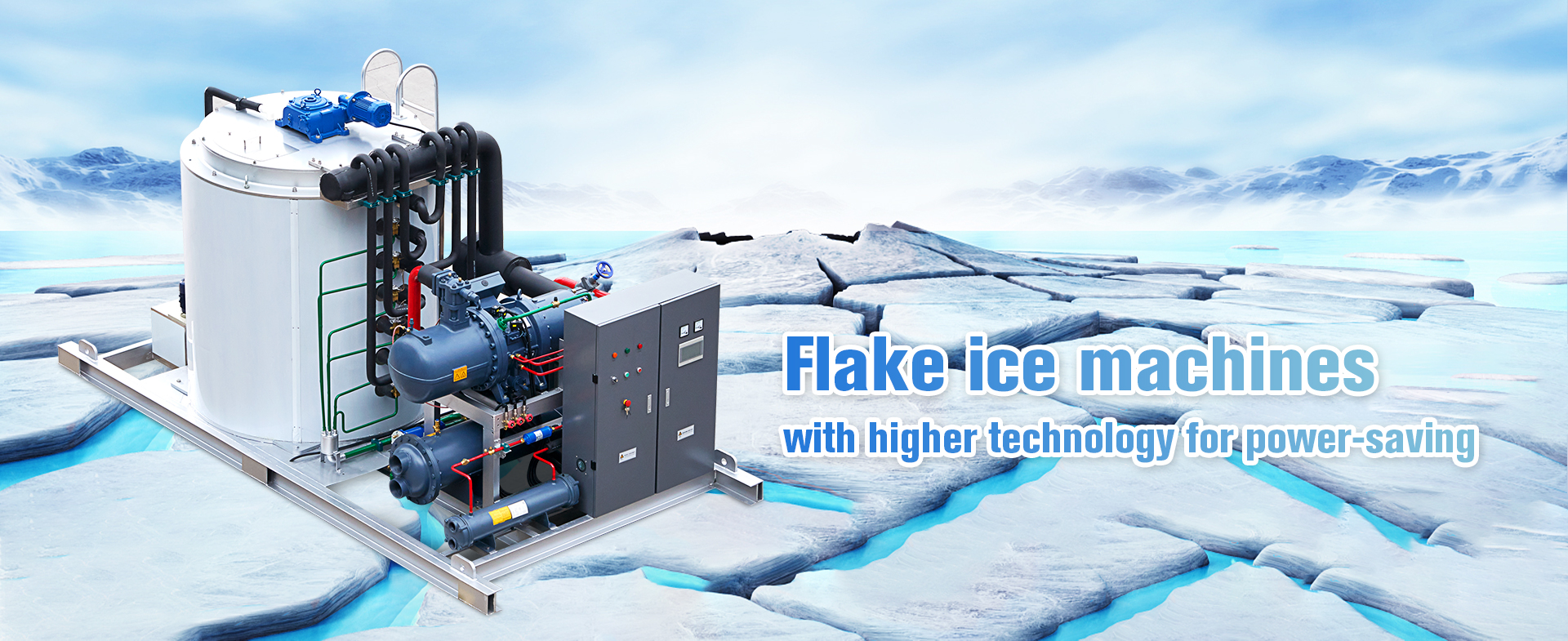
Seawater flake ice machines operate under harsher conditions than freshwater systems. A pump draws filtered seawater through corrosion-resistant piping. The water spreads as a thin film across a chilled cylindrical surface. Refrigerant removes heat from the metal wall. Ice forms gradually, not instantly. A rotating scraper detaches brittle flakes into a storage bin. This mechanism suits fishing vessels, coastal plants, seafood processors, and marine logistics.

The top ten types usually differ by condenser arrangement, capacity, mobility, and installation setting. Air-cooled units simplify installation, but warm engine rooms can reduce output. Water-cooled models reject heat more effectively, although their seawater circuits need careful filtration and maintenance. Direct seawater ice makers save freshwater, while hybrid systems use treated water for sensitive components. Compact skid-mounted machines fit crowded decks. Larger integrated systems support continuous production. Every configuration needs stable flow, clean strainers, and protected electrical connections. Small blockages matter.

Marine operators should monitor salinity, inlet temperature, discharge pressure, ice thickness, and scraper noise. Salt deposits can narrow passages and damage seals. Galvanic corrosion is another quiet problem, especially where dissimilar metals meet. Technicians should inspect anodes, rinse exposed surfaces, and verify drainage after each operating cycle. Sensors improve control, but they do not replace inspection. Real conditions are less tidy. Waves disturb intake flow, and biofouling can appear sooner than expected. A conservative design may produce less ice, yet it often protects reliability when weather and water quality change.

What Makes a Seawater Flake Ice Machine Type Stand Out

What Are the Top 10 Seawater Flake Ice Machine Types?

What Makes a Seawater Flake Ice Machine Type Stand Out

A seawater flake ice machine stands out through corrosion resistance, stable output, and easy cleaning. The top ten types usually differ by evaporator design, cooling method, ice thickness, and compressor configuration. A direct seawater system can reduce freshwater use, but its wetted surfaces need careful material selection. Duplex stainless steel, titanium, and suitable marine coatings often perform better than ordinary steel in salty environments.

The FAO SOFIA 2024 report recorded 185.4 million tonnes of global aquatic animal production in 2022. That volume creates strong demand for fast, hygienic icing during harvesting and transport. A reliable machine should produce thin flakes quickly, spread them evenly, and maintain ice quality during hot weather. It also needs simple access panels, automatic washing, and sensors that detect low water flow or abnormal pressure. Small details matter.

Energy performance deserves equal attention. The International Energy Agency reports that global cooling energy demand could more than triple by 2050. Therefore, efficient compressors, insulated ice bins, and heat recovery options can separate one machine type from another. A perfect design does not exist. Direct seawater systems may save freshwater but demand stricter maintenance. Freshwater systems may be easier to control, yet they add water-treatment costs. That trade-off should be tested against local salinity, vessel space, maintenance skills, and daily ice demand.

Large-Scale Coastal Seawater Flake Ice Plant Designs

What Are the Top 10 Seawater Flake Ice Machine Types?

Large-scale coastal seawater flake ice plants support fishing ports, aquaculture hubs, and seafood distribution centers. FAO’s State of World Fisheries and Aquaculture 2024 reported 185 million tonnes of aquatic animal production in 2022. About 89% entered human food supply chains. Reliable ice remains essential.

The ten main design types include direct seawater drum systems, indirect brine systems, vacuum-freezing units, scraped-surface machines, vertical drum plants, horizontal drum plants, modular containerized units, ammonia systems, carbon-dioxide systems, and hybrid refrigeration plants. Large facilities usually combine several designs. A 50-tonne-per-day plant may use multiple parallel machines, insulated storage, seawater intake screens, and automated conveyors. Direct seawater freezing reduces freshwater demand, but salt concentration requires strict control. Corrosion is another expensive problem. It is often underestimated.

Tips: Keep ice salinity within the buyer’s specification. Install coarse screens before fine filtration. Use corrosion-resistant heat exchangers and inspect them frequently. FAO guidance emphasizes hygienic handling and temperature control throughout seafood chains. The International Energy Agency also notes that cooling efficiency depends heavily on equipment design, operating conditions, and maintenance. Real coastal sites add turbulence, algae, sand, and changing seawater temperatures. A design that works on paper may struggle during a summer bloom. Pilot testing is worth the delay.

Compact, Modular, and Containerized Seawater Ice Machines

What Are the Top 10 Seawater Flake Ice Machine Types?

Seawater flake ice machines serve fishing ports, seafood processors, vessels, and remote cold rooms. FAO’s State of World Fisheries and Aquaculture 2024 reported 185 million tonnes of aquatic animals produced in 2022. That volume increases pressure on reliable onboard and shore-based cooling.

The ten practical types include compact countertop, vertical compact, mobile skid, split-system, modular, expandable modular, deck-mounted, trailer-mounted, insulated containerized, and full containerized machines. Compact units fit small landing sites. Their narrow cabinets can produce ice beside a sorting table. Modular units allow capacity growth when catches rise, though expansion needs spare electrical and drainage capacity. Containerized units arrive factory-assembled, with refrigeration, controls, water treatment, and storage inside one weatherproof enclosure. They suit islands and temporary processing sites. Less civil work is needed.

Seawater is aggressive. Engineers should specify corrosion-resistant evaporator surfaces, protected frames, washable interiors, and filtration before production begins. Ice quality depends on salinity, suspended solids, and the cleaning routine, not only compressor size. FAO guidance on fish handling stresses rapid chilling and hygienic contact surfaces. In field use, compact machines often lose output when seawater temperature climbs. That detail is easy to underestimate. A container may look ready, but poor ventilation can reduce efficiency. Capacity claims also need testing under local seawater conditions. Reports provide useful benchmarks, yet real harbors remain messier than brochures.

Specialized Machines for Fishing Vessels and Offshore Facilities

What Are the Top 10 Seawater Flake Ice Machine Types?

Fishing vessels and offshore facilities need ice that survives motion, salt, heat, and limited maintenance space. The top ten types include compact deck machines, hydraulic-drive units, air-cooled systems, seawater-cooled systems, containerized machines, modular skid units, high-capacity offshore machines, redundant twin-drum systems, freshwater-assisted machines, and automated ice-storage systems. Each design solves a different operational problem. A small trawler may need a compact machine with a 500-kilogram daily output. An offshore processing platform may require several tonnes per day, backup compressors, and remote monitoring.

The FAO’s State of World Fisheries and Aquaculture 2024 reported 185.4 million tonnes of aquatic animal production in 2022. Capture fisheries contributed about 91 million tonnes. These figures show why rapid onboard chilling remains commercially important. Ice helps protect texture, appearance, and microbial quality during fishing and transfer. Seawater flake ice also spreads evenly around fish, like thin glass fragments inside a wet hold. However, salinity accelerates corrosion. Marine-grade stainless steel, reliable brine filtration, and easy washdown access are essential. A perfect ranking is difficult. Vessel size and catch species change the best choice.

Tips: Check the machine’s real output in warm seawater, not laboratory conditions. Allow storage space near the sorting table. Ask for corrosion testing, spare-part access, and emergency ice capacity. The FAO recommends maintaining fish close to 0°C, but crews should verify temperatures throughout the hold. Small gaps in monitoring can become expensive quality losses.

What Are the Top 10 Seawater Flake Ice Machine Types? - Specialized Machines for Fishing Vessels and Offshore Facilities

Type Typical Ice Capacity Typical Installation Water and Ice Characteristics Typical Power Arrangement Best-Fit Application Main Advantages
1. Compact Marine Seawater Flake Ice Machine 0.5–3 tonnes/day Small fishing vessels, compact deck rooms, or service boats Produces thin, irregular flakes from filtered seawater; commonly used for direct catch coverage Single-phase or small three-phase marine-rated supply, depending on vessel design Small-scale coastal fishing and short fishing trips Low footprint, relatively simple installation, and fast access to fresh ice
2. Modular Marine Flake Ice System 3–15 tonnes/day Modular units installed in parallel in a vessel or shore-based marine facility Each module has an independent ice-making circuit and seawater filtration stage Three-phase electrical supply with staged compressor starting Medium fishing vessels, seafood depots, and expanding cold-chain operations Capacity can be increased by adding modules; maintenance can be performed unit by unit
3. Containerized Seawater Flake Ice Plant 10–50 tonnes/day Factory-built system inside a weatherproof container on a quay, platform, or remote site Includes seawater intake treatment, refrigeration, ice storage interface, and control equipment Three-phase shore power or an appropriately sized generator system Remote ports, temporary fishing bases, and offshore construction support sites Rapid deployment, protected equipment, and reduced on-site construction work
4. Skid-Mounted Offshore Flake Ice Machine 5–30 tonnes/day Mounted on a structural skid inside an offshore platform or marine processing area Designed for treated seawater and integration with dedicated brine drainage and meltwater systems Industrial three-phase power with marine or offshore electrical protection Offshore platforms, floating production units, and marine processing vessels Easy lifting and positioning, compact layout, and straightforward connection to plant utilities
5. Diesel-Generator-Compatible Flake Ice Machine 2–20 tonnes/day Fishing vessels or facilities where generator power is the primary energy source Uses filtered seawater; controls are selected to tolerate generator voltage and frequency variation Three-phase generator supply with suitable starting-current management Vessels operating far from shore and remote offshore facilities Operates where grid power is unavailable; can be coordinated with onboard load management
6. Ice Storage Integrated Flake Ice System 5–40 tonnes/day Installed with an insulated ice bin, screw conveyor, or controlled discharge system Flake ice is conveyed directly into insulated storage to limit melting and handling losses Three-phase power for the refrigeration plant and separate drives for conveying equipment Large fishing vessels, fish landing stations, and seafood processing facilities Improves ice availability during peak demand and reduces manual handling
7. Corrosion-Resistant High-Salinity Flake Ice Machine 3–25 tonnes/day Marine environments with high salt exposure and frequent seawater contact Uses corrosion-resistant wetted components, seawater filtration, and accessible washdown areas Marine-rated three-phase electrical system with protected controls Warm-water fisheries, offshore facilities, and vessels with intensive washdown routines Better resistance to saltwater corrosion and easier hygienic maintenance
8. Low-Temperature Refrigerant Flake Ice Machine 10–60 tonnes/day Large vessels or shore-side plants requiring continuous ice production Produces dry, subcooled flakes that generally remain free-flowing during storage and conveying Industrial three-phase power; refrigeration design depends on ambient conditions and refrigerant selection Long-haul fishing vessels, large seafood plants, and high-throughput landing facilities High output, improved storage stability, and effective heat removal from fresh catch
9. Automated Continuous-Feed Seawater Flake Ice Machine 15–80 tonnes/day Integrated with automatic seawater intake, filtration, ice discharge, and storage controls Continuous production with sensors for water flow, refrigeration pressure, ice level, and fault status Industrial three-phase supply with programmable controls and remote monitoring capability Large fishing fleets, seafood logistics hubs, and continuously operated marine facilities Reduced operator workload, stable production, and easier performance monitoring
10. Hybrid Seawater Flake and Freshwater Ice System 5–50 tonnes/day Facilities or vessels that need separate ice streams for different seafood-handling tasks Can use filtered seawater for catch chilling and freshwater for applications requiring lower salt content Shared or separate refrigeration circuits with independent water-treatment controls Mixed-species fisheries, seafood processing vessels, and offshore support bases Operational flexibility, separate product-handling options, and improved water-use management
Note: Capacity figures are typical planning ranges for marine flake ice equipment. Actual output, electrical load, seawater temperature, salinity, ambient temperature, storage capacity, and installation requirements vary according to the vessel or offshore facility design.

Energy-Efficient and Corrosion-Resistant Seawater Ice Systems

What Are the Top 10 Seawater Flake Ice Machine Types?

Energy-efficient and corrosion-resistant seawater ice systems are vital in coastal fisheries, aquaculture, and marine food processing. The ten most practical types include vertical drum, horizontal drum, compact modular, containerized, deck-mounted, shore-based, freshwater-wash, low-temperature, variable-speed, and heat-recovery systems. Each design produces thin flakes, but installation conditions change its real performance.

From field experience, titanium or duplex stainless steel components withstand salty spray better than ordinary steel. Marine-grade coatings also protect frames, drains, and seawater contact areas. However, coatings can fail near welds. That detail is easy to miss. A sealed compressor compartment reduces salt exposure, while automatic freshwater rinsing limits scale and chloride deposits. Operators should inspect spray nozzles, filters, and evaporator surfaces every week.

Energy use depends on more than compressor size. Variable-frequency drives adjust output during changing fish landings, preventing unnecessary cycling. Efficient insulation keeps stored ice colder for longer. Heat-recovery models can reuse condenser heat for wash water, although their added controls require careful maintenance. In my assessment, containerized systems suit temporary sites, while deck-mounted units save valuable floor space. Still, compact equipment may restrict service access. Buyers should compare measured kilograms of ice per kilowatt-hour, corrosion testing, cleaning procedures, spare-part availability, and performance in warm seawater. A machine that looks efficient in a brochure may consume more power after fouling begins.

How to Compare the Top Ten Machine Types for Different Applications

What Are the Top 10 Seawater Flake Ice Machine Types?

Comparing ten machine types starts with the ice-making method, not the advertised capacity. Direct-contact seawater flakers freeze treated seawater on a cooled drum. Indirect brine systems separate refrigerant from seawater, improving hygiene control. Vertical evaporators suit steady production, while horizontal drums often support easier inspection. Air-cooled units simplify installation, but they may lose efficiency in hot coastal rooms. Water-cooled models perform better under heat, although they require reliable cooling-water management.

Application changes the ranking. Compact marine flakers fit fishing vessels with limited deck space. Containerized systems help temporary processing sites and remote ports. Modular machines allow capacity growth, while high-capacity industrial units support seafood plants. Low-temperature configurations preserve ice longer during transport. Hybrid energy systems can reduce operating costs where electricity is unstable. These are practical differences, not just sales categories.

I compare each type through five records: ice output, salt tolerance, power use, cleaning time, and service access. Check the ice texture, too. Dry, thin flakes cool fish quickly, but overly fragile flakes melt faster. A larger machine is not automatically better. I once underestimated maintenance space around a drum, and routine cleaning became awkward. Brochure figures can also change under warm seawater conditions. Site testing matters. Measure seawater temperature, salinity, pump distance, and daily demand before choosing the final design.

What Are the Top 10 Seawater Flake Ice Machine Types?

How to Compare the Top Ten Machine Types for Different Applications

The chart compares ten common seawater flake ice machine configurations by application fit. Scores use a 1–10 comparative index based on corrosion resistance, scalability, footprint, operating flexibility, and suitability for marine food processing, aquaculture, and shore-based fish landing operations. Higher scores indicate a better overall fit, not a guaranteed production result.

20-Ton Seawater Flake Ice Machine: A Reliable Solution for Commercial Frozen Seafood Operations

A 20-ton seawater flake ice machine provides a practical and reliable ice supply for commercial frozen seafood operations. Designed to produce thin, dry flakes, it helps chill fish, shellfish, and other marine products quickly while supporting efficient handling during processing, storage, and transportation. The machine is available in two configurations: a marine type for onboard use and a land-based type for seafood processing plants, cold-storage facilities, and coastal distribution centers.

The system can use seawater directly for ice production, while seawater may also serve as the circulating cooling water for the condenser, reducing dependence on freshwater in suitable locations. Its reference power supply is 380V/50Hz, compatible with common industrial electrical systems. When required, the configuration can be adjusted for 60Hz operation to meet regional power standards. With appropriate installation, water filtration, ventilation, and routine maintenance, the equipment can provide a steady flake ice supply for daily seafood operations.

FAQS

How does a seawater flake ice machine produce ice?

A pump draws filtered seawater through corrosion-resistant pipes. The water forms a thin film on a chilled cylinder. Refrigerant removes heat from the cylinder wall. Ice develops gradually. A rotating scraper breaks it into flakes and drops them into a storage bin.

Why are flake ice machines useful in marine operations?

Flake ice spreads closely around seafood and cools it quickly. It helps fishing vessels, coastal plants, and seafood processors. The flakes are thin and easy to distribute. Hot decks still create challenges.

What are the main seawater flake ice machine types?

Common types include air-cooled, water-cooled, direct seawater, hybrid, compact skid-mounted, and integrated systems. They also vary by evaporator design, capacity, mobility, and compressor arrangement. The best type depends on space, water quality, and daily ice demand.

What is the difference between air-cooled and water-cooled systems?

Air-cooled systems usually simplify installation. Warm engine rooms can reduce their output. Water-cooled systems reject heat more effectively. Their seawater circuits require careful filtration and regular maintenance.

Can direct seawater systems reduce freshwater use?

Yes, direct seawater systems can reduce freshwater consumption. Their wetted surfaces need suitable corrosion-resistant materials. Salt deposits may narrow passages and damage seals. The saving is useful, but maintenance becomes stricter.

What should operators monitor during operation?

Operators should check salinity, inlet temperature, discharge pressure, ice thickness, and scraper noise. They should also inspect water flow and drainage. Sensors help identify unusual conditions. They do not replace human inspection.

How can operators reduce corrosion and blockages?

Inspect anodes and rinse exposed surfaces after operating cycles. Keep strainers clean and protect electrical connections. Check areas where different metals meet. Galvanic corrosion can develop quietly. Small blockages matter.

What should buyers consider before choosing a machine?

Compare local salinity, seawater temperature, available deck space, maintenance skills, and required ice volume. Consider insulated storage and efficient compressors. Automatic washing can reduce cleaning effort. No design is perfect. A conservative system may produce less ice, but it can remain steadier during rough weather.

Conclusion

A Seawater Flake Ice Machine is designed to produce thin, dry ice flakes by using seawater as the raw material, making it especially useful in marine and coastal environments. Its operation depends on reliable seawater intake, filtration, freezing surfaces, scraping systems, and controlled freshwater rinsing to reduce salt buildup. The most outstanding machine types combine stable ice production, durable construction, efficient cooling, easy maintenance, and strong resistance to corrosion. Large coastal plants are suitable for ports, seafood markets, and processing centers, while compact, modular, and containerized systems offer flexible installation for smaller facilities or temporary operations.

Specialized models can be adapted for fishing vessels, offshore platforms, and other marine facilities where space, weight, and energy use are important. Energy-efficient designs may include optimized compressors, heat recovery, automatic controls, and insulation, while corrosion-resistant materials help extend service life in harsh saltwater conditions. Comparing the top ten types requires evaluating ice capacity, footprint, power consumption, mobility, seawater quality requirements, maintenance needs, and operating conditions. This approach helps users select the most practical system for their specific marine ice-making application.

Clara

Clara

Clara is a dedicated marketing professional at Guangdong Icesnow Refrigeration Equipment Co., Ltd., a leading integrated manufacturer established in 2003. With a strong specialization in the research, design, manufacture, and sale of various ice production equipment—including flake ice machines,......
Previous Top Ice Tube Supplier in China for Global Buyers?