
0%

Picking the right flake ice machine manufacturer isn't just a box to tick—it can really make or break your daily production, product quality, and operating costs. Buyers all over the world end up comparing machines for all sorts of uses, from seafood processing and concrete cooling to supermarkets, hotels, and chemical applications. And here's the thing: the unit might look pretty simple on the surface, but the drum design, refrigeration system, water distribution, and how easy it is to keep clean all play a huge role in how well it performs.

So, this guide takes a look at some of the bigger names in the industry—Geneglace, Focusun, North Star, Vogt, and KTI-PLERSCH. They've each got their own strengths, whether it's years of experience, production capacity, regional reach, or how much they can customize. If you're shopping around, you'll want to check things like ice output, flake thickness, energy use, materials, and control systems. And if you're dealing with food, stainless steel contact surfaces are pretty much non-negotiable. Also, don't forget about maintenance access—that's something people overlook until it's a pain.

Look, a decent supplier should be able to give you clear technical data, walk you through installation, have spare parts available when you need them, and point you to references you can actually verify. And don't just take their word on performance—ask for the testing conditions in writing. The thing is, production figures can shift with water temperature, ambient heat, and even the refrigeration settings. It's an easy detail to miss, but it really shouldn't be.

Honestly, buying from overseas adds a whole other layer of things to think about. You're not just picking a unit—you've got voltage, refrigerant type, shipping dimensions, warranty terms, and whether anyone nearby can actually service the thing. And just because a brochure says a product meets some certification doesn't mean it matches your project's current requirements. You really have to double-check that stuff. Also, some manufacturers are technically brilliant, but if they don't have local support, they can be a risky choice for remote buyers. That's where fair comparisons get tricky. At the end of the day, no single brand works for every site.

If you're shopping around for a flake ice machine, this overview should make comparing the top manufacturers a bit easier. We look at real-world performance, how well the units are engineered, and whether they hold up over time. Sure, doing your homework takes extra effort, but it's worth it—skipping it can lead to expensive installation headaches down the road.

Top Flake Ice Machine Manufacturers for Global Buyers

Flake Ice Machines: Purpose, Design, and Common Applications

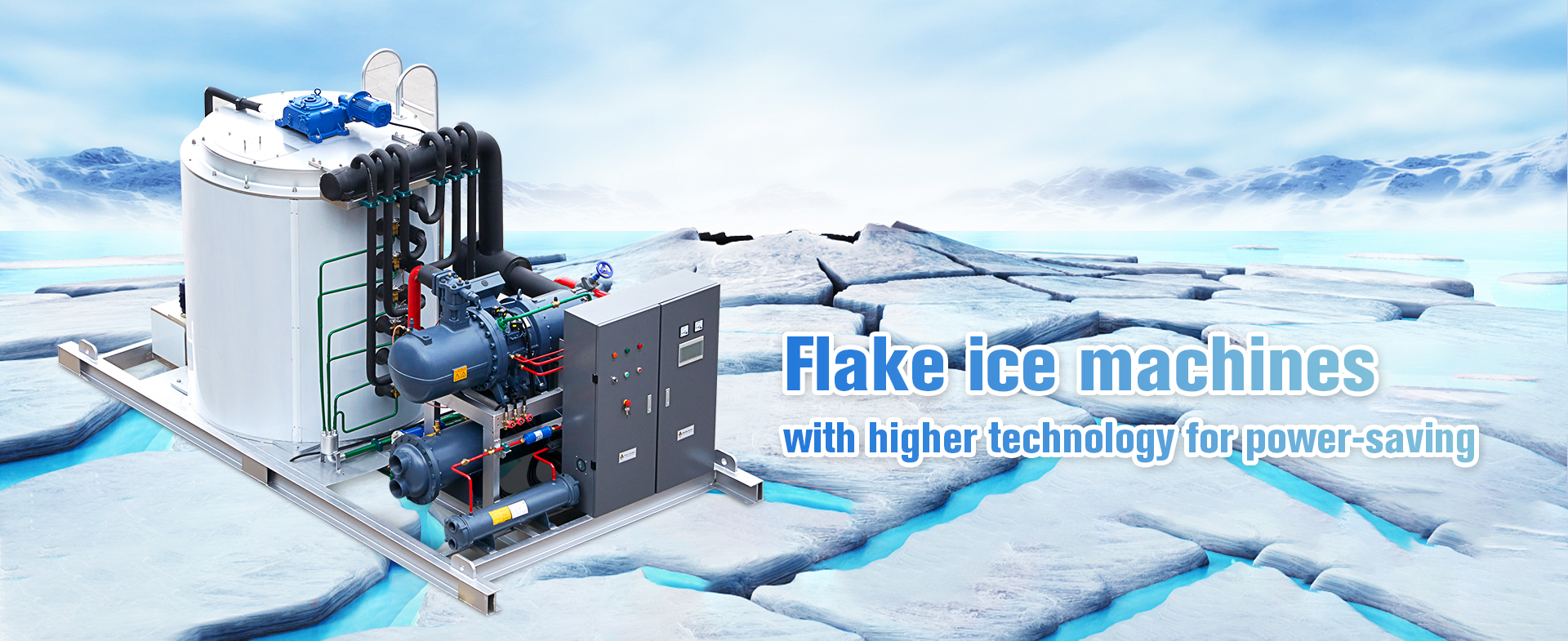
Flake ice machines produce thin, dry fragments rather than solid cubes. Their large surface area cools products quickly and evenly. This makes them useful when gentle contact matters. The ice forms on a refrigerated cylindrical drum, then breaks away with a scraper. A water pump continuously spreads clean water across the freezing surface. The result is soft, moldable ice with a temperature commonly near minus five degrees Celsius.

A well-designed machine uses stainless steel around wet and food-contact areas. Insulated walls reduce heat gain and protect production efficiency. Automatic water-level controls help maintain consistent ice thickness. A strong scraper assembly also matters, especially during long operating shifts. In practical installations, drainage deserves attention. Poor drainage can leave meltwater beneath the machine. That small issue may create hygiene problems and unnecessary maintenance.

Flake ice supports seafood displays, meat processing, supermarkets, concrete cooling, and medical transport. Fish handlers often pack it around products inside insulated boxes. Food processors may blend it into mixtures without damaging texture. Concrete producers use it to control heat during large pours. However, flake ice is not ideal for every application. It melts faster than many other ice types. That assumption can fail. Buyers should check local water quality, ambient temperature, electrical supply, storage capacity, and cleaning access. An efficient machine can still perform poorly when ventilation is restricted. Field experience suggests that simple access panels are often more valuable than impressive digital features. No design is perfect.

Key Criteria for Comparing Global Flake Ice Machine Manufacturers

Top Flake Ice Machine Manufacturers for Global Buyers

Key Criteria for Comparing Global Flake Ice Machine Manufacturers

Comparing manufacturers requires more than checking ice output. Examine production capacity, ice thickness, water contact materials, and energy consumption. A reliable machine should produce consistent flakes during long operating hours. Ask for test records from conditions similar to your facility. A cold storage room, humid dock, or unstable power supply can change performance. Stainless steel surfaces should be easy to clean and resistant to corrosion. Food-grade documentation and clear sanitation guidance also matter. A polished brochure is not proof.

Technical support can decide whether a machine remains useful after installation. Compare warranty terms, spare-parts availability, remote diagnosis, and technician response times. Confirm voltage, frequency, cooling method, and drainage requirements before ordering. Experienced suppliers should explain maintenance intervals without hiding difficult details. They should also provide manuals with diagrams, not vague instructions. One weakness deserves attention: some buyers compare only purchase prices. That can overlook water waste, electricity costs, downtime, and expensive imported parts.

Tips: Request a sample ice test, service contact, reference project, and five-year operating estimate. Check whether the supplier records compressor performance and cleaning procedures. Ask difficult questions. The answers reveal more than sales language. Leave room for uncertainty, because real operating conditions rarely match factory tests exactly.

Top Flake Ice Machine Manufacturers for Global Buyers - Key Criteria for Comparing Global Flake Ice Machine Manufacturers

Comparison Criterion Relevant Industry Benchmark Buyer Importance Recommended Evidence to Request Global Buyer Focus
Daily Ice-Making Capacity Commercial flake ice systems commonly range from several hundred kilograms to multiple tonnes of ice per 24 hours. Capacity should be stated at a defined ambient temperature and water temperature. Very High Capacity test report, rated operating conditions, product datasheet, and reference installation with a similar duty cycle. Match output to peak demand, not only average daily consumption.
Ice Thickness and Shape Flake ice is generally thin, irregular, and easy to spread. Typical commercial flake thickness is approximately 1.5–3.0 mm, depending on the evaporator design and operating conditions. Very High Technical specification, sample ice, thickness tolerance, and application references for seafood, food processing, or concrete cooling. Confirm that the ice melts and packs at the required rate.
Refrigerant Selection Refrigerant choice affects environmental compliance, safety, service availability, and operating cost. Natural refrigerants such as ammonia or carbon dioxide may offer low global warming potential but require suitable safety controls. Very High Refrigerant type, safety classification, local compliance documentation, and refrigerant service requirements. Check national regulations, technician qualifications, and refrigerant availability.
Energy Consumption Energy performance should be compared in kWh per tonne of ice under the same ambient and water temperatures. Actual consumption varies with condenser type, refrigerant, insulation, and operating load. Very High Measured kWh per tonne, test conditions, compressor data, and estimated annual energy model. Use local electricity tariffs to calculate total cost of ownership.
Water Consumption and Quality Potable or properly treated water is normally required for food-contact ice. Water hardness, suspended solids, and microbial quality can influence scale formation and sanitation performance. Very High Water-quality requirements, filtration recommendations, cleaning procedure, and food-contact material declarations. Include filtration, softening, and water-treatment costs in the project budget.
Evaporator and Ice-Contact Materials Stainless steel is widely used for food-contact surfaces because it offers corrosion resistance and cleanability. Material grade and weld quality should be clearly specified. Very High Material certificates, food-contact compliance documents, weld-finish details, and corrosion-resistance specification. Give priority to hygienic design in seafood and food-processing applications.
Condenser Configuration Air-cooled condensers are simpler where water is limited, while water-cooled systems can be more compact and efficient but require reliable cooling-water conditions and maintenance. High Heat-rejection data, installation clearances, cooling-water requirements, ambient-temperature limits, and noise data. Select according to climate, water availability, ventilation, and site infrastructure.
Operating Temperature Range Performance can decline in hot climates or when inlet water temperatures are high. The supplier should define rated ambient and water temperatures rather than provide capacity without conditions. High Capacity tables at different ambient temperatures, high-temperature operating limits, and derating information. Use climate-specific performance data for tropical or desert locations.
Automation and Controls Useful controls include automatic water-level management, ice-level sensing, overload protection, fault alarms, emergency stop functions, and operating-status indication. High Control-panel description, wiring diagram, alarm list, PLC or remote-monitoring options, and user manual. Confirm voltage, frequency, language, communication protocol, and remote-support compatibility.
Hygiene and Cleanability A hygienic system should minimize dead spaces, provide accessible drains, use smooth food-contact surfaces, and support routine cleaning and sanitizing without excessive disassembly. Very High Cleaning-instructions, sanitation schedule, drainage layout, food-safety documentation, and photographs of internal construction. Assess the time and labor required for daily and periodic sanitation.
Storage Bin and Insulation Storage capacity should be sized for production cycles and peak demand. Effective insulation reduces melt loss, while bin surfaces should be suitable for food-contact use and easy cleaning. High Usable storage volume, insulation material, expected holding time, meltwater drainage, and bin material specification. Compare usable ice volume rather than external bin dimensions alone.
Installation Requirements Installation planning should cover electrical supply, water inlet and drain, ventilation, foundation loading, service clearances, lifting access, and ambient conditions. High General-arrangement drawing, utility schedule, foundation requirements, installation manual, and commissioning checklist. Identify site modifications before issuing the purchase order.
Electrical Compatibility Industrial ice machines may be configured for different supply voltages, phases, and frequencies. Motors and controls must be compatible with the destination country’s electrical system. High Electrical nameplate, single-line diagram, rated current, protection requirements, and destination-specific configuration. Confirm local grid compatibility and certification requirements before shipment.
Certifications and Compliance Depending on the destination, buyers may require electrical safety, pressure-equipment, electromagnetic compatibility, machinery, and food-contact compliance documentation. Very High Valid certificates, declarations of conformity, test reports, pressure-component documentation, and country-specific import records. Verify that certificates apply to the exact model and configuration being purchased.
After-Sales Service Reliable support should include commissioning guidance, troubleshooting, spare-parts identification, response procedures, and access to qualified refrigeration technicians. Very High Service-level agreement, support contacts, technician network, spare-parts list, and escalation process. Prioritize suppliers able to support the machine in the destination region.
Spare-Parts Availability Critical parts may include scraper components, bearings, pumps, valves, sensors, contactors, belts, seals, filters, and refrigeration-system components. High Recommended spare-parts inventory, lead times, part numbers, warranty terms, and local stocking arrangements. Calculate downtime risk for remote or seasonal operations.
Warranty Coverage Warranty terms should define coverage period, exclusions, labor responsibility, transport costs, compressor coverage, and conditions related to water quality or improper installation. High Signed warranty document, claims procedure, exclusions, response time, and commissioning requirements. Compare practical claim support, not only the stated warranty duration.
Total Cost of Ownership The purchase price is only one cost element. A complete comparison should include energy, water, filters, sanitation, labor, spare parts, freight, installation, refrigerant service, and expected downtime. Very High Five-year cost model, operating assumptions, maintenance schedule, consumables list, and lifecycle replacement estimates. Select the lowest dependable cost per usable tonne of ice.
Manufacturing and Quality Controls Consistent fabrication, documented testing, pressure testing, electrical inspection, leak testing, and final performance checks reduce commissioning and reliability risks. High Factory quality plan, inspection records, factory acceptance test, serial-number traceability, and pre-shipment photographs. Require documented testing for customized or high-capacity systems.
Delivery and Export Capability International projects require suitable packaging, export documentation, harmonized product classification, clear Incoterms, and coordination of oversized or heavy cargo. High Production schedule, packing list, shipping dimensions, country-of-origin documents, Incoterms, and previous export references. Allow time for customs clearance, inland transport, and site unloading.
Customization Capability Common project variations include capacity, bin size, condenser type, voltage, controls, stainless-steel construction, discharge arrangement, and integration with conveyors or cold rooms. Medium–High Approved drawings, change-control procedure, prototype or reference project, and documented effect on capacity and warranty. Avoid undocumented modifications that could affect safety or serviceability.
Noise and Workplace Conditions Noise depends on compressors, fans, pumps, scraper drives, and enclosure design. Measured sound levels should include the test distance and operating condition. Medium Sound-pressure data, test method, vibration controls, and recommended equipment-room layout. Important for indoor production areas, retail sites, and facilities near occupied spaces.
All benchmark values are general industry reference ranges or verification guidelines. Final machine selection should be based on model-specific test data, local regulations, site conditions, and a documented total-cost-of-ownership calculation.

Leading Manufacturer Profiles by Region and Market Focus

Top Flake Ice Machine Manufacturers for Global Buyers

Leading manufacturers differ by region, production scale, and buyer priorities. East Asian producers often focus on high-output machines for seafood ports and processing plants. European manufacturers usually emphasize hygienic construction, water efficiency, and low-emission refrigerants. North American suppliers commonly design modular systems for supermarkets, food distribution, and concrete cooling. In hot regions, manufacturers serving the Middle East and Africa must address high ambient temperatures, unstable power, and limited technical service.

Demand remains substantial. FAO’s 2024 State of World Fisheries and Aquaculture reported 223.2 million tonnes of global fisheries and aquaculture production in 2022. That volume requires dependable ice near landing sites. The United Nations Environment Programme’s 2023 Cooling Emissions Gap Report also highlights rising cooling demand and the need for more efficient equipment. However, published market forecasts vary widely. Buyers should question impressive numbers. Machine capacity may be measured under ideal water and temperature conditions.

Tips: Compare daily ice output, not only model size. Check production at your site’s water temperature. Request corrosion testing for coastal installations. Ask about compressor access, cleaning intervals, and spare-part delivery times. A factory visit helps, but it cannot replace local service records. Confirm electrical standards before ordering. Small mistakes become expensive during peak harvest weeks.

Top Flake Ice Machine Manufacturers for Global Buyers

Typical daily production requirements by global market focus

The chart presents representative flake ice production ranges commonly used for procurement planning. Seafood retail and small processing operations generally require lower capacities, while concrete cooling, cold-chain distribution, and large seafood processing typically require higher daily output. Actual machine sizing depends on climate, water temperature, operating hours, storage capacity, and regional power standards.

Machine Capacity, Energy Use, and Technical Performance

Top Flake Ice Machine Manufacturers for Global Buyers

Machine Capacity, Energy Use, and Technical Performance

Capacity should be judged by usable ice output, not the headline number. A machine rated at 10 tonnes daily may produce less in a hot, humid room. Water temperature, condenser conditions, and ice thickness can change results. Ask manufacturers for test data under operating conditions similar to your site.

Energy use deserves equal attention. Compare kilowatt-hours per tonne, not only motor power. Efficient compressors, clean condensers, insulated storage bins, and stable refrigeration controls can reduce operating costs. However, published figures may exclude pumps, fans, and water treatment equipment. The real electricity bill can be higher.

Technical performance appears in daily details. Consistent flake thickness protects seafood and cools products quickly. A reliable scraper system should run smoothly without unusual vibration. Stainless steel contact surfaces simplify cleaning and support hygienic handling. Good access to filters, bearings, and control panels also shortens maintenance time.

I have found that service access is often underestimated. A small fault can become expensive when technicians wait for special parts. Ask about response times, spare-part availability, remote diagnostics, and operator training. Specifications can flatter reality. Request a factory test, inspect safety controls, and compare measured output with promised performance before purchase.

Certifications, Customization, and International Compliance

Global buyers evaluating flake ice machines should examine evidence, not polished brochures. A credible manufacturer can provide current certifications, test reports, and traceable serial numbers. Electrical approvals may include CE marking or destination-specific schemes. Requirements depend on voltage, installation conditions, and importer responsibilities. ISO 9001 supports process consistency, but it does not replace product safety approval. Ask who issued each document and whether it covers the exact model.

Customization begins with operating reality. Buyers should specify daily ice capacity, flake thickness, ambient temperature, water quality, and floor space. A coastal seafood facility may need corrosion-resistant surfaces and sealed controls. A cold-storage site may require different drainage, insulation, and remote monitoring. Confirm refrigerant type, energy data, noise limits, and food-contact materials before signing. Factory testing should record output, ice temperature, electrical load, and cleaning access. Small details matter.

International compliance also includes labels, manuals, packing lists, certificates of origin, and safe installation instructions. Documents should match the machine plate and shipping invoice. That sounds basic. It is often missed. Reliable suppliers explain service intervals, spare-part availability, and warranty limits in writing. They should also identify local technicians or training options. No manufacturer gets every project perfectly right; experienced teams can still overlook drain slopes or regional plug standards. Reviewing drawings early can catch these gaps before production.

Pricing, Installation, Maintenance, and After-Sales Support

Global buyers should compare total ownership cost, not just the machine quotation. Capacity, ambient temperature, water quality, refrigerant, and stainless-steel grade can change the final price. FAO’s State of Food and Agriculture 2023 estimates that 13.2% of food is lost before retail. Reliable flake ice can protect fish, produce, and seafood during handling, but storage and drainage must work together. Price is only the entry point.

A practical budget should include freight, electrical upgrades, water filtration, drainage, commissioning, and operator training. Installation records should show ice output at the buyer’s actual ambient temperature, not only laboratory conditions. The 2024 ASHRAE Handbook—Refrigeration emphasizes adequate condenser airflow and correct refrigerant practices. Leave service access around the unit. Small omissions become expensive. Even careful estimates can miss local construction costs.

Maintenance terms deserve equal attention. Contracts should specify cleaning frequency, scale removal, filter replacement, emergency response time, and spare-parts availability. UNEP’s 2024 Food Waste Index reported 1.05 billion tonnes of food waste in 2022, making dependable temperature control commercially important. After-sales teams should provide remote diagnostics, illustrated manuals, and documented service visits. Ask whether technicians can reach the site within 24 or 48 hours. I would challenge any “maintenance-free” claim; ice machines operate in wet, mineral-rich environments. A lower-cost package may still fail if training is rushed or replacement parts are unclear.

15KA Flake Ice Machine: Features, Benefits, Applications, and Buying Considerations

The 15KA Flake Ice Machine produces up to 1,500 kg of flake ice in 24 hours, making it suitable for businesses that require a steady and substantial ice supply. During operation, a water pump sends water from the tank to a distribution tray, which spreads it evenly across the inner wall of the evaporator. Refrigerant circulating inside the evaporator removes heat and freezes the water into a thin layer. A rotating ice blade then scrapes the ice from the surface, while the remaining water returns to the tank for continuous recirculation.

Flake ice is thin, soft, and easy to mix with products, providing rapid cooling with reduced risk of damaging delicate materials. It can be used for beverage cooling, drinking water preparation, vegetable fresh-keeping, fishery preservation, food handling, and selected chemical-processing tasks. Its continuous production process can help maintain stable ice availability during busy operating periods.

When purchasing a 15KA machine, buyers should consider the required daily output, available installation space, water quality, power supply, ventilation, and ice storage capacity. The surrounding temperature and water temperature may also affect actual production. Easy access to the water tank, evaporator, ice blade, and refrigeration components is important for routine cleaning and maintenance, while a reliable drainage system and suitable insulation can support hygienic operation and reduce ice loss.

FAQS

What is flake ice, and how is it made?

Flake ice consists of thin, dry fragments instead of solid cubes. Water spreads across a refrigerated cylindrical drum. A scraper breaks the frozen layer away.

Why is flake ice useful for seafood and meat?

Its broad surface cools products quickly and evenly. The soft flakes fit around fish inside insulated boxes. Gentle contact helps protect product texture.

What temperature does flake ice usually reach?

Flake ice commonly reaches about minus five degrees Celsius. It remains moldable and easy to distribute. Actual temperature depends on water and room conditions.

Which machine materials and features deserve attention?

Stainless steel suits wet and food-contact areas. Insulated walls reduce heat gain. Automatic water controls help maintain steady ice thickness.

Why is drainage important during installation?

Meltwater can collect beneath the machine when drainage is poor. That damp area may create hygiene problems. Leave clear access for cleaning.

What should buyers compare besides ice production capacity?

Compare ice thickness, water use, energy consumption, and cleaning access. Check performance using local water temperature. A large model is not always better.

How can buyers evaluate technical support?

Ask about warranty coverage, spare parts, manuals, and technician response times. Request diagrams and realistic maintenance intervals. Sales language alone proves little.

What site conditions can reduce machine performance?

Restricted ventilation, humid air, unstable power, and warm water can reduce output. Confirm voltage, frequency, cooling method, and drainage requirements. Small mistakes become expensive.

Is flake ice suitable for every application?

No. It melts faster than many other ice types. It may suit seafood, food processing, concrete cooling, and medical transport, but site testing remains necessary.

What evidence should buyers request before ordering?

Request a sample ice test, similar project reference, service contact, and five-year operating estimate. Ask for compressor records and cleaning procedures. Factory tests can be imperfect.

Conclusion

This guide explains how a Flake Ice Machine produces thin, dry, and easily moldable ice for seafood preservation, food display, concrete cooling, chemical processing, and other commercial uses. It examines essential design features, including evaporator structure, refrigeration systems, ice thickness control, hygiene considerations, and automated harvesting. Global buyers will also learn how to compare manufacturers by production capacity, energy efficiency, operating stability, build quality, and technical performance under different climate conditions.

The article further reviews manufacturer strengths by region and market focus without promoting specific brands. It highlights the importance of recognized certifications, customized configurations, voltage compatibility, installation planning, and compliance with international safety and food-contact requirements. Buyers will also find practical guidance on pricing, shipping, commissioning, spare parts, routine maintenance, warranty coverage, training, and after-sales support. Together, these factors provide a clear framework for selecting reliable equipment that delivers consistent ice output, controlled operating costs, and long-term value.

Ethan

Ethan

Ethan is a dedicated marketing professional at Guangdong Icesnow Refrigeration Equipment Co., Ltd., a company established in 2003 that specializes in the research, design, manufacture, and sale of various ice-making machines. With a deep expertise in the industry, Ethan plays a crucial role in......
Previous What Is a Flake Ice Maker Evaporator and How Does It Work?