


So, choosing the best flake ice makers for your business? It's not just about comparing price tags. You need a pretty clear picture of how you actually run day to day, what your product quality demands, and where demand might go later.
A seafood market, for example, usually needs soft, moldable ice for display beds. A hospital kitchen might care more about dependable output, easy cleaning, and quiet operation. A beverage distributor? Storage capacity and quick recovery during rush hours are probably the big ones.
Start with your real numbers. Write down daily ice use, your busiest service windows, floor space, and water conditions. Then compare production capacity, energy use, drainage design, and bin compatibility. Also check whether the machine makes a consistent flake size. Uneven flakes tend to melt fast, and that can mess up product presentation. Ask suppliers for performance data under realistic temperatures, not just perfect lab conditions.
Reliability really matters.
Experienced operators also look at the evaporator, condenser access, control panel, and sanitation points. Those little details can shape maintenance time and long-term costs. Look for clear warranty terms, responsive tech support, and replacement parts that are actually easy to get. A trustworthy supplier should tell you the limitations too, not just promise perfect performance.
A cheaper machine can look tempting. But higher water use or frequent service calls can change the final math. One thing people often overlook is local water quality. Hard water can lead to more scale buildup and lower efficiency. No checklist is perfect, either. Your first estimate may need a revision after a seasonal demand review. By balancing practical experience, technical specs, and verified supplier support, you can choose equipment that keeps operations stable instead of creating another daily headache.

Define Your Business’s Flake Ice Requirements
Define Your Business’s Flake Ice Requirements
Before comparing machines, record how much ice your business uses each day. Measure normal demand and busy-period demand separately. Peak demand matters more than an average estimate. A seafood counter may need steady ice from early morning until closing, while a medical transport team may need short, intense production periods. Write down delivery schedules, storage capacity, and the longest time ice must remain usable. Be precise.
Your application also determines the right flake texture. Soft, thin flakes suit fresh seafood displays because they settle around products without creating large gaps. Thicker flakes may perform better for food processing or temporary transport. Check the required production temperature, drainage arrangement, water quality, and available electrical capacity before choosing equipment. A qualified technician should verify the site conditions, especially in older buildings. Small details matter.
Ask staff how ice is actually handled. They may scoop it manually, load insulated containers, or move it through a conveyor system. These routines affect hopper size, access height, and cleaning time. During site visits, observe noise, heat, and floor space instead of trusting a specification sheet alone. I have seen businesses overestimate capacity and ignore storage limits. That mistake created unnecessary cleaning and wasted ice. Leave room for seasonal growth, but avoid buying capacity that daily operations cannot use.
| Business Application | Typical Daily Ice Requirement | Preferred Flake Ice Characteristics | Recommended Production Planning | Storage and Handling Requirements | Key Selection Considerations |
|---|---|---|---|---|---|
| Seafood Display and Fish Markets | 100–500 kg per day, depending on product volume and display area | Thin, soft flakes that provide close contact with seafood and reduce product bruising | Calculate average demand plus 20–30% reserve capacity for delivery peaks and warm weather | Insulated storage bin; direct ice dispensing is useful for frequent display replenishment | Food-contact materials, easy cleaning, reliable drainage, and consistent ice thickness |
| Grocery Stores and Supermarkets | 300–1,500 kg per day for seafood, meat, produce, and promotional displays | Uniform flakes with good coverage and low melting rate under refrigerated conditions | Size the machine for the busiest sales period rather than the annual average | Large insulated bin or silo; consider automatic filling and level monitoring | Continuous operation, compact footprint, low water consumption, and simple staff operation |
| Restaurants and Catering Kitchens | 50–300 kg per day, based on menu, events, and seafood preparation volume | Clean, dry flakes suitable for ingredient cooling, food presentation, and temporary storage | Use the highest expected daily requirement plus 15–25% reserve capacity | Small or medium insulated bin; locate near the preparation area without blocking workflow | Low operating noise, easy access, sanitation controls, and compatibility with available drainage |
| Food Processing and Packaging | 1,000–10,000+ kg per day for rapid cooling, mixing, transport, or process control | Consistent particle size and temperature; flakes should distribute evenly through the product | Use production-line calculations based on kilograms of product processed per hour | Automated conveying or pneumatic ice delivery may be required for continuous production | Industrial-duty construction, automation interfaces, hygienic design, redundancy, and service access |
| Concrete and Construction Cooling | 500–5,000+ kg per day during hot-weather or high-volume pours | Consistent flakes that melt quickly and distribute evenly through batch water or aggregates | Base capacity on batch size, pour schedule, ambient temperature, and required concrete temperature | Bulk insulated storage with conveyors or augers for transfer to the mixing system | High output, dependable operation in hot environments, robust controls, and efficient water use |
| Medical, Laboratory, and Research Use | 25–200 kg per day, depending on sample volume and cooling procedures | Clean, consistent flakes for temporary cooling and non-contact temperature management | Determine demand from daily procedures and maintain a reserve for emergency use | Dedicated clean storage bin with protected access and clear sanitation procedures | Material compatibility, hygienic construction, temperature consistency, and documentation support |
| Events, Hospitality, and Mobile Service | 50–400 kg per event or operating day | Attractive, soft flakes for displays, food service, and short-term product cooling | Estimate demand by guest count, service hours, menu type, and event duration | Portable insulated containers; allow additional capacity for transport and unexpected demand | Compact dimensions, low electrical demand, quick start-up, mobility, and simple water connection |
| Retail Ice Distribution | 1,000–10,000+ kg per day, depending on distribution routes and customer contracts | Stable flake size and moisture level that support packing, transport, and product presentation | Plan for peak-season demand, delivery schedules, and possible simultaneous machine operation | Large insulated storage, automated conveying, bagging equipment, and reliable inventory monitoring | High availability, scalable output, preventive maintenance access, and integration with packaging systems |
| Remote or Water-Limited Locations | 50–1,000 kg per day, based on local operations and replenishment frequency | Reliable flakes produced with the available water quality and supply volume | Include additional capacity to cover water interruptions, transport delays, and seasonal demand | Insulated storage sized for the longest expected supply gap | Water filtration, low water consumption, backup power planning, corrosion resistance, and easy maintenance |
Planning figures are typical starting ranges. Actual requirements should be confirmed using peak daily demand, operating hours, ambient conditions, available utilities, storage losses, and the required reserve capacity.
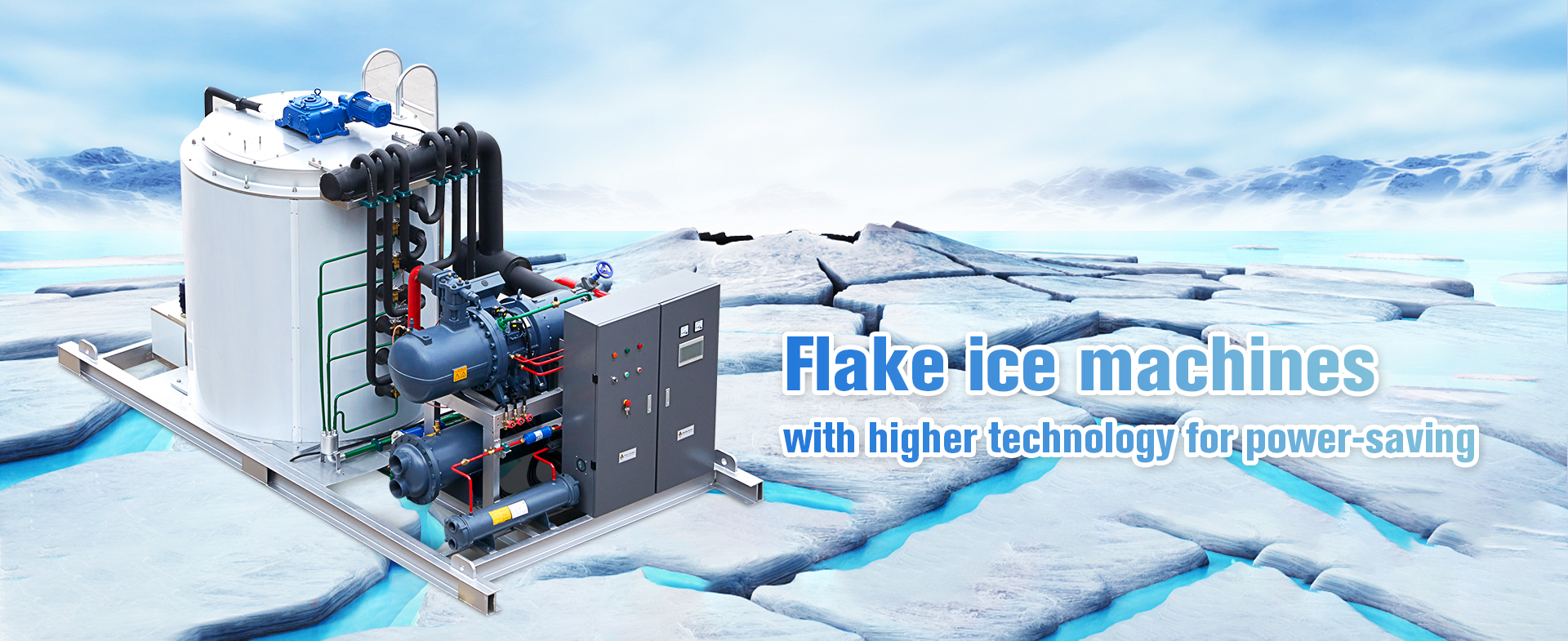
GM-500KA Flake Ice Machine: A Complete Guide to 50-Ton-Per-Day Ice Production
The GM-500KA Flake Ice Machine is designed for demanding commercial and industrial applications that require up to 50 tons of ice production per day. Its high-capacity system delivers clean, compact, and slow-melting ice, making it suitable for seafood preservation, food processing, produce cooling, concrete mixing, and other temperature-sensitive operations. The uniform ice output provides efficient coverage and helps maintain stable cooling conditions during storage and transportation.
A PLC-based control system regulates the ice-making cycle with precision, allowing operators to monitor and adjust production easily. Automated control improves consistency while helping reduce unnecessary water and electricity consumption. The system is designed for continuous operation, supporting reliable output during peak production periods and minimizing the need for manual intervention.
Built with a high-quality stainless steel shell, the machine offers strong corrosion resistance and lasting durability in demanding working environments. Its independent integrated structure combines essential components in a compact, straightforward design, helping save installation space and simplifying maintenance. With stable performance, convenient operation, and efficient resource use, this 50-ton-per-day flake ice machine is a practical choice for businesses with large-scale cooling requirements.

FAQS
Measure normal daily use and the busiest service period separately. Peak demand matters more than average demand. Record delivery times, storage space, and seasonal increases. A seafood counter may need steady ice from morning until closing.
Keep roughly 15 to 20 percent reserve capacity. Hot weather and unexpected orders can increase demand. Do not buy excessive capacity. Unused output may create storage problems and wasted ice.
Soft, thin flakes spread around seafood and leave fewer gaps. They help maintain an even, attractive display. Thicker flakes may suit processing or short transport. Texture matters.
Scraped-drum systems freeze water on a chilled cylinder and remove it with a rotating blade. Direct refrigeration may offer simpler operation. Secondary-liquid systems can require more components. Compare maintenance needs carefully.
Drier flakes usually last longer during transport. Wetter flakes can mold around products more effectively. Test samples by hand before deciding. Clumping is a warning sign.
Check electrical capacity, water temperature, drainage, floor space, and water quality. Older buildings deserve professional inspection. Measure access height and cleaning space. Small details matter.
Manual scooping needs safe access and suitable hopper height. Containers may require larger storage capacity. Conveyors need compatible placement and floor space. Watch real workflows, not only specification sheets.
Compare ice output, energy use, and water consumption together. Ask for measured performance at your actual water temperature. Clean filters regularly and inspect airflow. Dust can reduce production.
Examine the blade, drum, water filter, drainage points, and service panels. Difficult panels can delay simple repairs. Keep a written cleaning routine. I might still underestimate cleaning time.
Check noise, heat release, storage limits, and recovery speed. A warm workspace can raise cooling costs. Staff should understand the controls quickly. Specifications never tell the whole story.
Conclusion
Choosing the right Flake Ice Makers begins with understanding your business’s daily ice demand, preferred flake size, storage needs, and application requirements. Compare available machine types and production methods to determine which option can deliver consistent ice for food display, seafood handling, cooling, or other commercial uses. Pay close attention to production capacity, ice quality, energy and water efficiency, and performance during peak periods.
Before making a decision, confirm that the equipment fits your available space and has suitable power, water, drainage, and ventilation connections. Sanitary design, easy cleaning, accessible components, and durable construction can reduce maintenance time and support reliable long-term operation. Finally, evaluate the total cost, including purchase price, installation, utilities, servicing, and replacement parts. Selecting a supplier with dependable technical support, clear warranty terms, and suitable after-sales service will help ensure that your chosen Flake Ice Makers provide steady performance and long-term value for your business.
Related Posts
-

How to Choose the Best Flake Ice Machine?
-

10 Tips for Choosing the Best Flake Ice Makers
-

What Are the Top 10 Seawater Flake Ice Machine Types?
-

How to Choose an Ice Flake Maker in 2026?
-

Best Seawater Flake Ice Machine Supplier in China?
-

What is a Flake Ice Maker and How Does It Enhance Your Icy Beverage Experience?
