
0%

So, picking the right manufacturer for a Flake Ice Maker Evaporator? It’s not just about who has the lowest price in the catalog. That evaporator really decides a lot—how thick the ice is, how fast it freezes, how much energy it drinks, how easy it is to keep clean, and how much maintenance you’ll be dealing with. And in places like seafood plants, healthcare facilities, or concrete cooling operations, even a few millimeters can make or break product quality. You also need water to spread evenly across the drum. And those scrapers? They’ve got to hold up to wear without ending up in the ice.

You know, Dr. Ian Bell—a refrigeration systems specialist—once put it like this: “Reliable ice production starts with controlled heat transfer, not just a powerful compressor.” And honestly? That point still holds up if you’re looking at top manufacturers in 2026. Names like Focusun, Geneglace, Vogt, Iceman, and North Star Ice Equipment tend to come up a lot, usually because of their evaporator designs, production capacity, and service networks. But here’s the thing: a strong brand name on its own doesn’t guarantee long-term performance. So, when you're buying one of these machines, don't skip the details: check the stainless-steel quality, whether it plays nice with your refrigerant, the drum finish, what the scraper's made of, the insulation, and how easy it is to get in there and clean.

And honestly? Real operating conditions matter a lot. A seafood processor on the coast probably cares most about corrosion resistance and keeping output steady. A construction supplier might be more into compact size and getting it up and running fast. A lab? They'll likely want stable flake temperature and really tight hygiene controls. In the end, the best choice comes down to those little details.

Though yeah, some specs are still kind of unclear.

Here's the thing: manufacturers don't always share the full picture—things like wear data, how efficiency changes with the seasons, or real-world failure rates out in the field. And honestly, that gap matters. If you want a comparison you can actually rely on, you should look at verified customer references, factory paperwork, whether spare parts are easy to get, and how fast technicians respond. That's the approach this guide takes as it looks at the leading Flake Ice Maker Evaporator manufacturers—using those practical, real-world checks. That said, no ranking out there can take the place of an engineering assessment tailored to your specific application.

2026 Top Flake Ice Maker Evaporator Manufacturers?

What Is a Flake Ice Maker Evaporator?

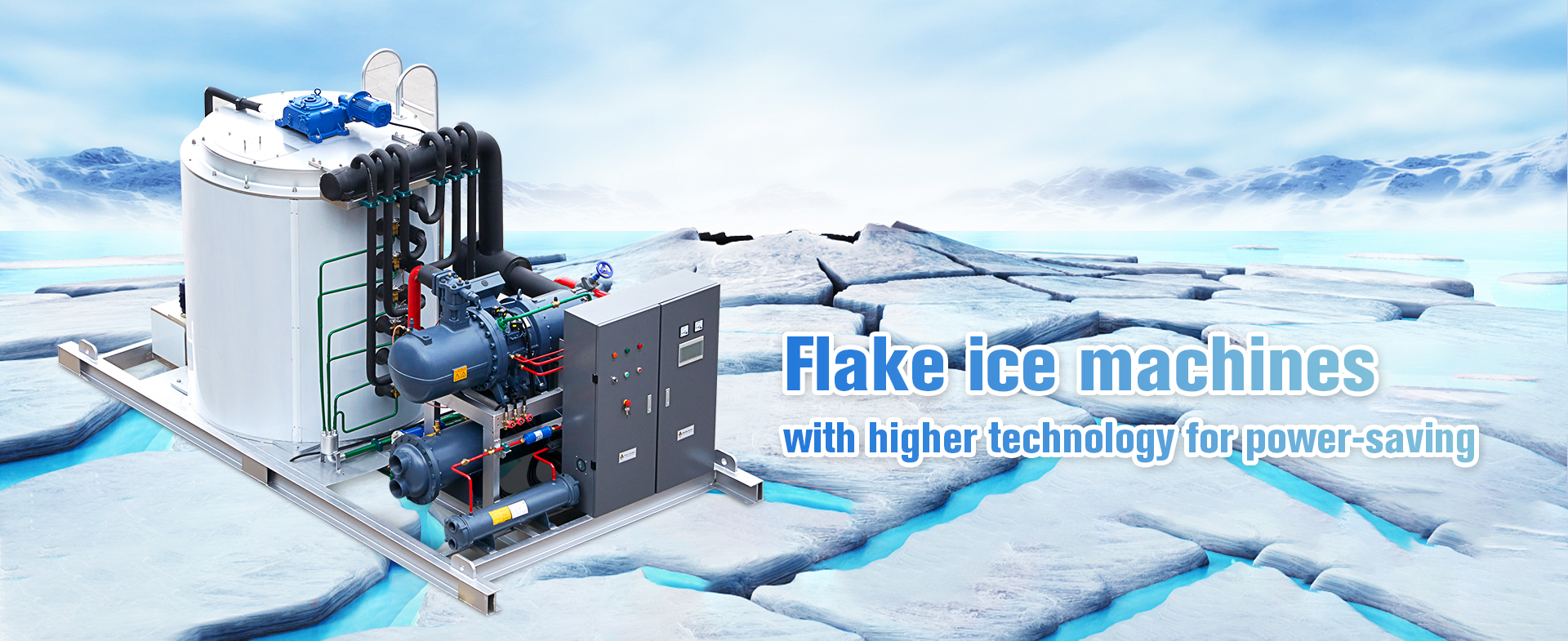
A flake ice maker evaporator is the cold, rotating surface where water becomes thin, dry ice flakes. It usually has a cylindrical drum, with refrigerant circulating inside the drum wall. Water flows over the outer surface, freezes quickly, and forms a fragile ice layer. A scraper then removes the layer continuously.

This design suits seafood handling, concrete cooling, produce transport, and laboratory processes. FAO’s State of World Fisheries and Aquaculture 2024 reported more than 185 million tonnes of global aquatic animal production in 2022. That volume explains the need for reliable, hygienic cooling equipment. Flake ice also covers products closely, reducing empty spaces between ice and food.

Evaporator performance depends on drum material, surface finish, refrigerant temperature, water quality, and scraper adjustment. ASHRAE Handbook—Refrigeration describes ice-making performance through heat transfer, freezing time, and refrigeration control.

A rough surface may improve water retention, but it can increase cleaning difficulty. A smoother surface may reduce residue, yet flake release can become inconsistent. Small details matter.

Operators should inspect ice thickness, outlet temperature, and unusual scraping noise. A practical check is simple. Measure the flakes by hand. Wet, thick pieces may indicate poor freezing control or excessive water flow. Energy efficiency also deserves attention. The evaporator is only one part of the system, and weak insulation can quietly raise power consumption.

How Does a Flake Ice Evaporator Produce Ice?

How Does a Flake Ice Evaporator Produce Ice?

A flake ice evaporator uses a chilled vertical cylinder to freeze a thin layer of water. Refrigerant flows through channels behind the cylinder wall, removing heat from the metal surface. A water distributor sprays a steady film over the cold surface. As the water travels downward, it freezes into a thin, brittle sheet.

The ice does not remain attached for long. A slow rotating scraper breaks the frozen layer into small flakes. These flakes fall into an insulated storage bin or move directly into production equipment. The ice is soft and irregular. That shape helps it surround seafood, produce, and other temperature-sensitive goods.

The result is delicate. In practical equipment testing, water flow, refrigerant pressure, and scraper clearance require careful adjustment. Too much water creates wet ice and raises energy use. Too little water leaves dry patches on the cylinder. A narrow scraper gap may improve harvesting, but it can also increase wear and vibration.

Experienced technicians inspect the evaporator surface regularly. They check scale buildup, drainage, bearing noise, and ice thickness. Clean water improves heat transfer and supports consistent flake quality. However, even a well-designed system can perform poorly when maintenance is ignored. The overlooked detail is often the water distribution pattern.

Key Types of Flake Ice Maker Evaporators

In flake ice equipment, the evaporator controls more than freezing speed. It affects ice thickness, energy use, cleaning time, and service risk. The main types include drum, vertical-cylinder, and flat-plate evaporators. Each design creates ice differently. Each suits a different workload.

Drum-type evaporators use a rotating chilled surface. Water spreads over the outside, freezes into a thin layer, and a scraper removes it continuously. This design supports steady production for seafood handling, concrete cooling, and food processing. Drum diameter, surface finish, scraper pressure, and water distribution need careful inspection. Poor alignment can produce wet flakes or uneven thickness.

Vertical-cylinder models use a stationary or slowly rotating freezing wall. They can offer a compact footprint and straightforward maintenance access. However, harvest timing matters. If the ice layer grows too thick, motors work harder and flakes become coarse. Flat-plate evaporators are less common for high-volume output, but they can suit smaller machines. Their broad surface may simplify inspection while complicating uniform water flow. A larger evaporator is not automatically better. Field checks should include refrigerant distribution, defrost control, insulation, food-contact materials, and scraper wear. Rated capacity can fall short when inlet water temperature or cleaning habits are ignored. That detail is easy to miss.

2026 Top Flake Ice Maker Evaporator Manufacturers? – Key Types of Flake Ice Maker Evaporators
Evaporator Type Operating Principle Typical Ice Thickness Common Evaporator Material Typical Capacity Range Suitable Applications Main Advantages Key Selection Considerations
Vertical Cylindrical Drum Water flows over the outside of a refrigerated vertical drum. Ice forms on the cold surface and is removed periodically by a rotating ice-breaking or scraping mechanism. Approximately 1.5–3.0 mm Food-contact stainless steel, commonly AISI 304; AISI 316 may be selected for more corrosive environments. Approximately 0.5–50 tonnes per 24 hours, depending on drum size, refrigerant, water temperature, and ambient conditions. Seafood processing, fish preservation, meat processing, concrete cooling, supermarkets, and industrial process cooling. Produces dry, irregular flakes with a large contact area; compact layout; well suited to continuous production. Check scraper durability, ice discharge design, water distribution, cleaning access, insulation, and corrosion resistance.
Horizontal Drum Water is distributed across a horizontal refrigerated drum. A scraper or harvesting assembly removes the ice layer as the drum rotates. Approximately 1.5–3.0 mm Food-grade stainless steel or another approved corrosion-resistant metal used for the ice-contact surface. Approximately 1–30 tonnes per 24 hours, subject to the refrigeration system and evaporator dimensions. Food distribution, seafood storage, small industrial cooling systems, and applications requiring accessible equipment servicing. Accessible mechanical arrangement; relatively simple ice harvesting; can be integrated into skid-mounted systems. Evaluate footprint, scraper alignment, bearing protection, drainage, access for sanitation, and vibration control.
Flat Plate Evaporator Water is sprayed or distributed over a refrigerated flat plate. A harvesting cycle loosens the ice, which then falls or is mechanically removed. Approximately 1.5–5.0 mm Stainless steel or a compatible food-contact metal with a smooth, cleanable surface. Approximately 0.5–10 tonnes per 24 hours, depending on plate area and refrigeration capacity. Laboratories, food preparation, hospitality, small cold rooms, and installations with limited production demand. Simple construction; easy visual inspection; suitable for modular and compact equipment designs. Confirm plate flatness, harvest reliability, water coverage, defrost control, cleaning procedures, and ice discharge space.
Direct-Expansion Evaporator Refrigerant evaporates directly inside the evaporator surface or refrigerant circuit, removing heat from the water film without a secondary coolant loop. Usually about 1.5–3.0 mm for flake ice systems Stainless steel ice-contact surfaces with copper, stainless steel, or compatible refrigerant tubing depending on the construction. Varies widely; commonly used from compact units to high-output industrial systems. Commercial and industrial flake ice machines where high heat-transfer efficiency and a compact refrigeration circuit are priorities. Efficient heat transfer; fewer intermediate heat-transfer components; potentially lower pumping energy than indirect systems. Verify refrigerant compatibility, pressure rating, oil return, expansion-device control, leak testing, and applicable safety regulations.
Brine or Secondary-Coolant Evaporator A refrigeration circuit cools a secondary fluid such as brine or glycol. The chilled fluid removes heat from the ice-forming surface. Approximately 1.5–4.0 mm Stainless steel or other corrosion-resistant materials selected for the water and secondary-fluid conditions. Commonly applied in medium- to large-scale systems, with output determined by the chiller and evaporator surface area. Central refrigeration plants, multi-machine installations, facilities requiring refrigerant isolation, and process systems with distributed cooling loads. Separates the primary refrigerant from the ice-making section; flexible system layout; useful for centralized cooling. Account for secondary-fluid concentration, pump energy, heat-exchanger approach temperature, freeze protection, and sanitation requirements.
Integrated Scraper-Type Evaporator A motor-driven scraper continuously or periodically removes ice from a refrigerated surface while fresh water is supplied to maintain the ice-forming film. Approximately 1.5–3.0 mm Food-grade stainless steel for the ice-contact area; scraper components must be compatible with low-temperature and sanitary operation. Approximately 1–50 tonnes per 24 hours, depending on surface area, scraper design, and refrigeration duty. Continuous seafood operations, concrete cooling, chemical processing, and applications requiring steady flake-ice delivery. Consistent harvesting; supports continuous production; can reduce the need for separate harvest cycles. Assess motor load, scraper wear, noise, sanitation, automatic controls, overload protection, and spare-part availability.
Technical note: Capacity, ice thickness, and material specifications are indicative industry ranges rather than fixed ratings. Actual performance depends on evaporating temperature, refrigerant, water temperature and quality, ambient conditions, condenser performance, operating schedule, and local food-safety requirements.

How to Evaluate Evaporator Quality and Performance

When comparing 2026 flake ice maker evaporator manufacturers, assess the evaporator before marketing claims. Its surface should freeze water evenly, without dry bands or thick ridges. Use a clean inspection light. Look for consistent welds, smooth edges, and no trapped moisture. Food-contact stainless steel should resist corrosion and repeated thermal cycling. Small defects matter. A useful field check is examining the ice pattern after several continuous cycles, not after one short demonstration.

Performance testing should use stated ambient temperature, inlet water temperature, and refrigerant conditions. Record ice thickness, harvest time, production rate, and power consumption. Compare repeated cycles, not one impressive result. The scraper should release flakes cleanly. Excessive noise or uneven loading can signal poor heat transfer. Measure temperatures at several evaporator points. A wide temperature spread deserves investigation. Reliable manufacturers should provide material certificates, pressure-test records, and clear maintenance intervals.

Do not judge quality by polished appearance alone. Ask how the surface performs after months of scale exposure and repeated defrost cycles. Scale causes trouble. Cleaning access must be safe and practical. I would question unusually high output figures because ideal conditions may hide weaknesses. A transparent supplier explains test methods, limitations, and expected service life. No inspection is perfect. Site water chemistry can change results. Drainage is another overlooked detail. Standing water may freeze into hard patches and distort flake shape. Keep detailed logs during site trials; they often reveal problems that brochures miss.

2026 Top Flake Ice Maker Evaporator Manufacturers

2026 Top Flake Ice Maker Evaporator Manufacturers

The top flake ice maker evaporator manufacturers in 2026 focus on heat transfer, durability, and serviceability. Their evaporators must create thin, dry flakes without excessive energy use. Engineers usually compare stainless steel grades, refrigerant compatibility, cylinder thickness, and scraper design. These details affect ice quality and maintenance costs.

Good manufacturers provide measured performance data, not only attractive capacity claims. Reliable testing should cover ambient temperature changes, continuous operation, defrost cycles, and water mineral content. A well-built evaporator forms an even ice layer across the drum. Uneven freezing can increase scraper wear and produce wet, inconsistent flakes.

Small details matter. Weld quality matters too.

Manufacturers with strong technical teams also offer installation guidance, replacement parts, and clear inspection schedules. Operators should ask about corrosion resistance, pressure testing, surface finish, and expected service intervals. No evaporator is perfect. Some compact models save space but restrict access during cleaning. Larger designs may improve output yet require stronger supports and more installation room. This trade-off deserves honest attention. A dependable supplier should explain it plainly, including weaknesses.

In 2026, the strongest manufacturers are not simply the ones promising maximum capacity. They are the ones combining verified performance, practical maintenance, responsive support, and consistent production quality.

Choosing the Right Manufacturer for Your Application

Choosing the Right Manufacturer for Your Application

Selecting a flake ice maker evaporator manufacturer requires more than comparing catalog prices. The evaporator must match your water quality, production target, refrigerant system, and operating environment. A seafood processor may need dense, dry ice, while a concrete plant may prioritize fast production and simple cleaning.

Request measurable data, not broad promises. Review ice output at your actual inlet water temperature. Check evaporator material, welding methods, wall thickness, and corrosion protection. Ask for performance records from applications similar to yours. A factory visit can reveal useful details, including machining accuracy, pressure testing, and assembly cleanliness.

Support matters after delivery. Confirm spare-part availability, response times, installation guidance, and technician training. Manufacturers with documented quality procedures are easier to evaluate. Still, certificates alone cannot prove field performance. Speak with existing users when possible. Their comments may expose noise, scaling, or delayed service issues.

A low quotation can be misleading. I have seen projects save money initially, then lose production through difficult maintenance. That mistake is easy to repeat. Leave room for trial testing and technical questions. The best choice is not always the largest manufacturer. It is the one that understands your load pattern, accepts engineering feedback, and can support the evaporator throughout its working life.

FAQS

What is a flake ice maker evaporator?

It is a cold, rotating drum that freezes water into thin ice flakes. Refrigerant moves inside the drum wall. Water freezes on the outer surface. A scraper removes the ice continuously.

Why is flake ice useful for cooling products?

Flake ice covers surfaces closely. It leaves fewer empty spaces around food. This supports seafood handling, produce transport, concrete cooling, and laboratory work. The flakes are thin and easy to spread.

Which materials should a reliable evaporator use?

Food-contact stainless steel is a practical choice. It should resist corrosion and repeated temperature changes. Inspect welds, edges, and hidden moisture. Small defects can become larger maintenance problems.

How can operators check ice quality?

Watch the flakes after several continuous cycles. Check their thickness, dryness, and shape. Wet, thick pieces may show poor freezing control. Excessive water flow can also cause them.

What performance data should buyers record?

Record ambient temperature, inlet water temperature, freezing time, output, and power use. Measure temperatures at several drum points. Repeat the test. One impressive cycle proves very little.

What signs may indicate poor evaporator performance?

Look for dry bands, thick ridges, uneven flakes, or hard frozen patches. Listen for unusual scraper noise. A wide temperature difference across the drum deserves investigation. I might miss subtle signs without proper logs.

How do surface finish and water quality affect results?

A rough surface may hold water better. It can also make cleaning harder. A smooth surface may reduce residue. Flake release can become inconsistent, though. Water chemistry changes the outcome.

What maintenance details deserve attention?

Inspect the scraper, drainage, insulation, and cleaning access regularly. Standing water may freeze into hard patches. Weak insulation can quietly increase energy use. Maintenance intervals should be clear and realistic.

How should manufacturers be evaluated beyond appearance?

Do not trust polished surfaces alone. Ask for material certificates and pressure-test records. Request results from repeated cycles. Examine performance after scale exposure and defrosting. Marketing numbers can hide weaknesses.

Conclusion

This guide explains the role of a Flake Ice Maker Evaporator, the core component responsible for freezing water into thin, soft, and easily moldable ice flakes. It describes how water flows over a refrigerated drum or cylindrical surface, freezes into a thin layer, and is scraped away continuously. The article also reviews major evaporator designs, including drum-based and specialized configurations, while comparing factors such as cooling efficiency, ice production capacity, material durability, hygiene, energy consumption, maintenance requirements, and operating stability.

The 2026 manufacturer overview focuses on how to assess suppliers without relying solely on price or production claims. It highlights the importance of engineering experience, customization capability, quality control, after-sales support, and compliance with applicable safety and sanitation standards. By matching evaporator structure, output, refrigerant system, installation conditions, and intended application, buyers can select a reliable manufacturer and achieve consistent ice quality, efficient operation, and long-term equipment value.

Ethan

Ethan

Ethan is a dedicated marketing professional at Guangdong Icesnow Refrigeration Equipment Co., Ltd., a company established in 2003 that specializes in the research, design, manufacture, and sale of various ice-making machines. With a deep expertise in the industry, Ethan plays a crucial role in......
Previous How to Choose the Best Flake Ice Maker for Your Business