
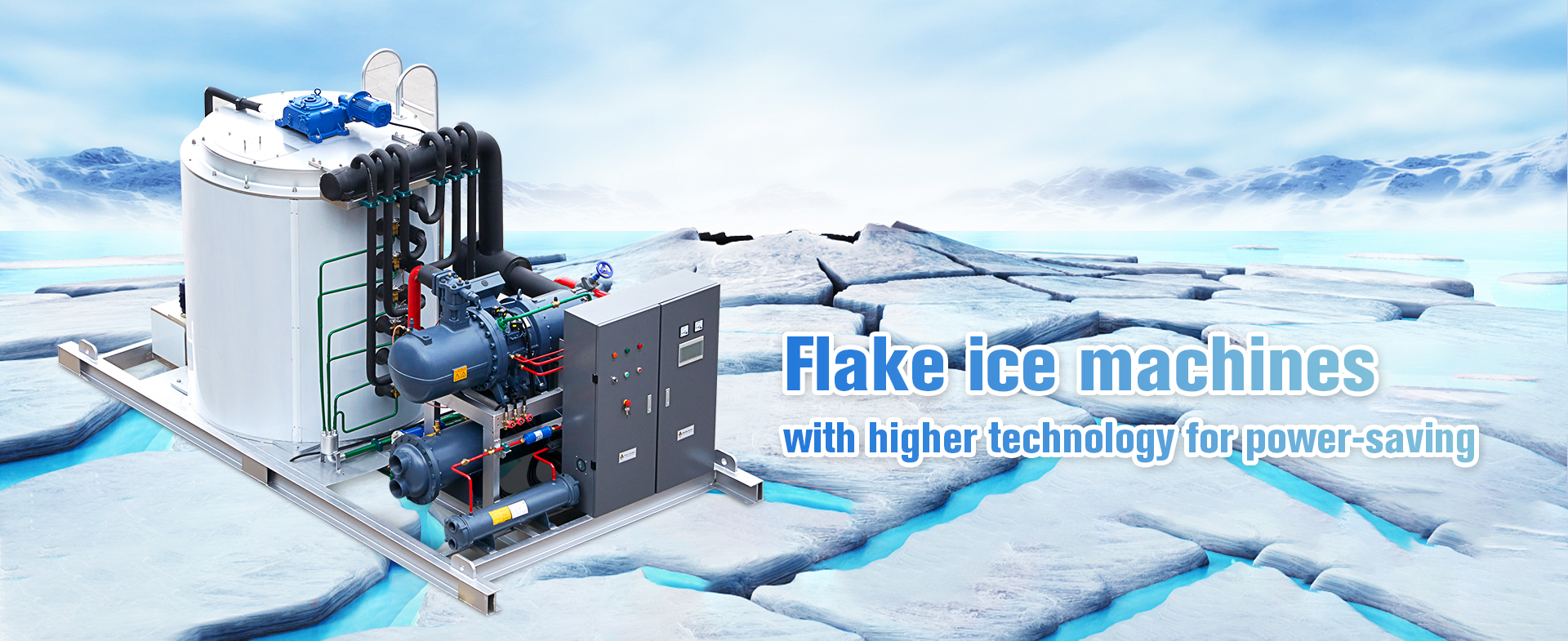
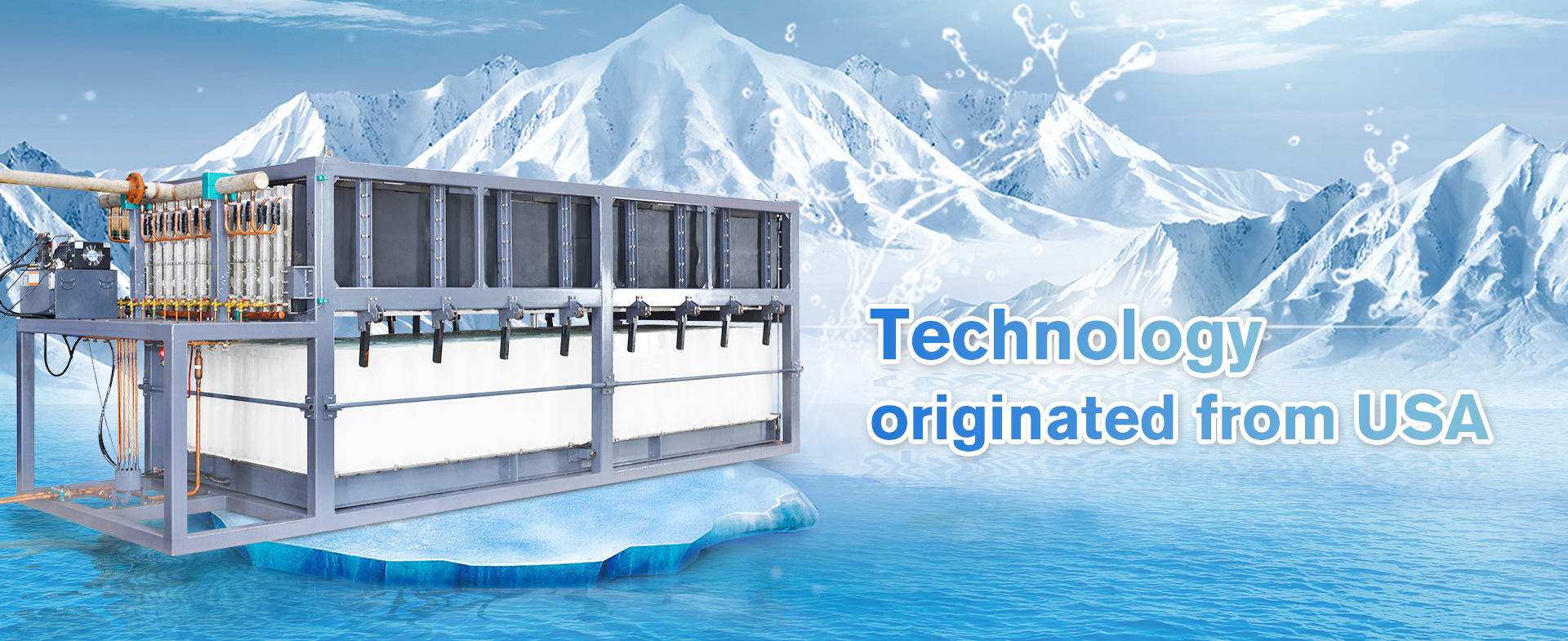


Buyers of flake ice machines tend to ask more demanding questions than those purchasing for beverage service—after all, their product line depends on the ice. The following eight answers address the key decisions behind the GM / GMH flake ice range (0.3–50 tons/day, available in freshwater and seawater versions).
Q1: Why choose flake ice for supermarket displays?
Flake ice is thin and has a high surface-area-to-volume ratio, allowing it to chill products faster than tube or cube ice. It sits loosely around fish, shrimp, and produce rather than compacting into a solid mass. In open-top display cases, the flake ice tumbles and re-forms, keeping the pile mobile and maintaining product temperature longer than solid ice blocks would.
Q2: Flake, tube, or cube—which is right for my store?
A useful rule of thumb: anything that needs chilling (seafood, dairy cases, bakery) is best served by flake ice; anything served in a glass or a bag calls for tube or cube. Our flake vs. tube comparison presents the five key differences—melting rate, dilution, surface area, storage behavior, and power consumption per ton—in a single table.
Q3: Can a flake ice machine operate on seawater?
Yes—that is precisely what the GMH seawater series is designed for. Seawater units incorporate corrosion-resistant components and descaling options for coastal and fishing-vessel applications, while standard GM freshwater units are specified for treated fresh water. The large industrial flake range covers both versions.
Q4: How do I store flake ice without it compacting?
Flake ice requires volume rather than tight containment: bins should be sized for 24–48 hours of output, with the rake or conveyor delivering ice to the top of the pile. Our cold-room design guide covers storage sizing, racking, and the common mistake of binning flake so tightly that it turns into slush at the bottom.
Q5: What does it cost to produce flake ice (energy)?
Plan on roughly 55–65 kWh per ton of flake in warm climates, and less in cooler ones—the machine cycles rather than running flat-out, and water treatment quality has a measurable impact. The price guide includes a worked energy-cost example by tonnage.
Q6: R404A is being phased out in my country—which refrigerant should I order?
For new plants in the US, R507 and R449A are the standard long-term choices; R404A remains accepted in many other markets. Simply specify the destination country and we will confirm the compatible refrigerant at quotation—retrofitting refrigerant later is a project you should never undertake on commission.
Q7: Do food plants need explosion-proof (ATEX) ice machines?
Only where zone-rated ventilation and dust regulations apply—typically flour and sugar handling areas, not fish or produce rooms. Our ATEX Zone 1 & Zone 2 flake ice machines cover the certified configurations; if you are unsure, send us the plant layout and we will check the zoning requirements.
Q8: How often does a flake machine need descaling service?
With treated water, 6–12 months between descale cycles; with hard untreated water, closer to 3–6 months. Every unit ships with the descaling access kit and a service interval card, and our case studies show real service schedules from installed plants.
Need help sizing a unit? Send us your product line (supermarket / seafood / dairy), daily kilogram requirements, and whether the site uses freshwater or seawater—we will provide a factory-direct quote within 24 hours. Contact Icesnow · WhatsApp +86 18948701341.
Post time: Oct-23-2026